Category Archives: Tools and Aids

Solar PV for the self builder- Part 3

Tools and Software

When planning a solar PV system there are free tools and apps that will help understand how to select your new PV system and how to maintain your existing Solar PV system.

Tools and Software

View Existing Solar PV Outputs-The free software provided by SolarEdge (a solar company) is very good . They allow customers to share how their solar PV system is performing in different parts of the world. One only needs to type in a location and if there are any installations near you they will show up. The SolarEdge link is here. Search for county locations rather than the town name.

European Union (Photovoltaic Geographical Information System)

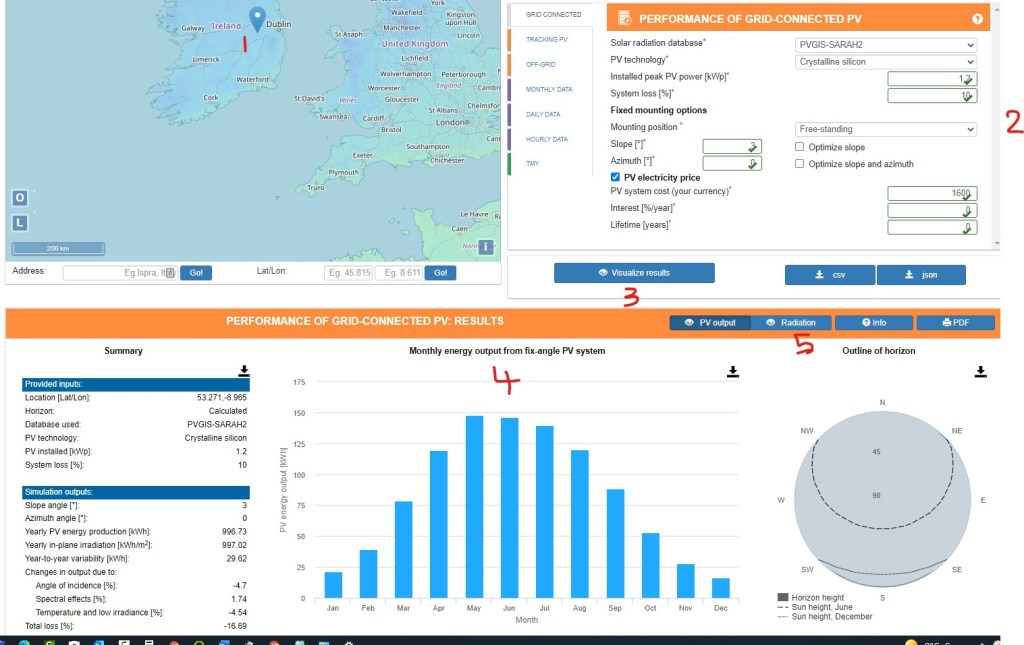
This tool allows one to see the expected yield of a PV system in different countries. One selects a location on the map first and then enters the details of your system or planned system. Previous weather data is used to model the results. If one uses the daily data option one can evaluate what would happen if one angled the Solar panel slope and the expected solar pv yield with the changes. One can keep the same setup for your site and pick different countries to see the changes.

The below image shows the steps to get you started ie 1,2, 3,4,5

This is the link to the web site European Union Solar PV
Solar PV European Commision

View the movement of the sun around your home or select your solar PV location.

This software will allow you to view the solar changes of the sun as it moves around your home or solar PV system over time. The app is called Sun Surveyor Lite. It is available in a free version or a paid version on both android and apple platforms. The free version works well.

Sun Surveyor Lite

Bubble Level

When calculating the slope of one’s roof the Bubble Level app is useful.

Check if your PV System is working correctly .

When one has a solar PV system -faults can occur. Some of these faults will not show on your solar PV app. Most PV systems installed do not have individual Solar panel management unless one requested optimisers or microinverters. What is required is a tool to check if your PV system is working efficiently and generating the correct output power.

When a solar PV system is installed the installer will usually carry out this test before completing the installation. This test ensures that the designed output power (in watts) matches the solar PV input power (w/m2).

The first tool one needs is a pyranometer or also known as a solar irradiance meter or solar radiation meter. It measures the light that generates electricity within the solar panels-this is the approximately the wavelength from 300 to 1200 nanometers below. An affordable pyranometer can be seen here https://pvpanelinnovations.com/

This solar irradiance meter is calibrated in watts per m2 (w/m2). The light that one can see with ones eyes is between 400 and 700 nanometers. This means that solar panels can convert more light into energy than what the human eye can see. The majority of the heat one feels on your skin is the energy above 700nm and the solar panel can use this light/energy.

As mentioned before there are in principle 3 types of silicon used to make solar panels -mono crystaline, poly crystaline and CIS. Below is a side by side comparison of how the types of silicon use light energy shown from the above image.

Solar Panel Technology

If a solar panel is 20 % efficient at converting this light into electricity then the majority of the other energy ends up as heat. As stated before an increase in temperature negatively affects the output power of a solar panel. If one uses the online calculator app below and adjusts the temperature one can see the effect temperature has on the solar panel.

Convert Solar Irradiance (W/m2) into power (Watts)

When one has a solar pyranometer/irradiance meter it provides the data for the App.

Solar PV Meter
IN-SOL Solar Irradiance Meter

This software converts the solar irradiance measurements (w/m2 -watts per meter square) into electric power (watts or kw/h). One can enter the size of your solar panel and the number of solar panels and the output power is calculated in watts) . Solar PV Irradiance converter.

IN-SOL Solar Irradiance Meter
IN-SOL Solar Irradiance Calculator

Cleaning/Maintaining Your Solar Panels.

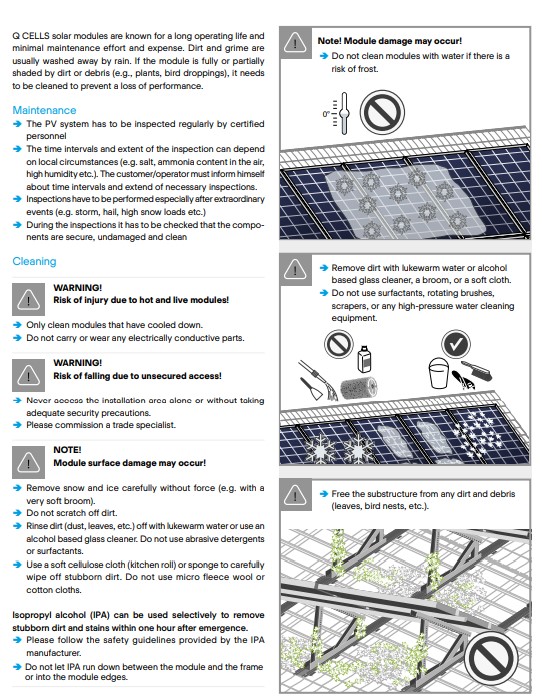
There is a correct way to clean solar PV panels and there are risks. Below are the recommendations by the manufacturer Q CELLS. In summary-

Solar PV Cleaning

  • Do Not use a hose with water
  • Do Not clean modules with water if there is a risk of frost
  • Only clean the modules when they have cooled down
  • Use kitchen roll for stubborn dirt and not fleece or cotton cloths.
  • Do not use rotating brushes or power hoses.
Solar PV Cleaning

Solar PV for the self builder -Part 2b

Analysing a Solar PV quotation.

PV Panel Options-Output wattage of pv panels are typically available in the range 270 Watt, 340 Watt, 375 Watt, 455 Watt. A manufacturer’s brand name will add to the price. Some brands names are LG, QCELL, LONGI, REC etc. A manufacturer warranty can be up to 25 years. A performance warranty of up to 25 years is available.

Example -A Qcell 340 W , 25 year manufacturer warranty and performance warranty can be purchased for €60 ex vat, a REC 365W for €165, a LG 440W for €261. Some manufacturers are now including a labour warranty of between 10 and 25 years.

Inverters Options-The standalone single inverter price varies from around €160 for a 1.5kw system and increases to approximately €1,300 for a 10kw inverter for the domestic market (single phase). The number of MPPT channels provided in the inverter changes the price-a single MPPT channel inverter will usually be cheaper than a dual MPPT channel inverter. MPPT methods also affect the price (a list of the mppt types available are listed herefor the techies.) As above the manufacturer brand name and the length of the manufacturers warranty also dictate the price you pay.

Hybrid Inverters (those that charge batteries) start at around €600 for a 3kw system and increase to €1600 for a 5kw system. The warranty varies from about 2 years to 25 years. When purchasing an inverter one must ensure that it has a certificate of compliance to match the national grid profile (a grid profile determines when the inverter should switch off and on if there was a power failure) . So purchasing a cheaper inverter online might not be compatible with the national standards required in each country. This grid profile is usually programmed/selected when installing the inverter.

Another option when purchasing a central inverter is to install optimizers . These provide as a means to improve the solar output if shading exists when using a central inverter. These cost around €50 each.

Microinverters prices start at around €100 for a 350 watt pv panel and increase to approximately €160. Warranty’s vary from 10 years to 25 years. Some brand names that exist are Enphase, TSUN , BPE. They require a single management control unit that controls, configures and allows one to monitor the performance remotely on a desktop or mobile phone App. The brand name also carries a cost. The microinverter is able to monitor the performance of each individual solar panel and inform you about an individual failure or issues. They also offer one of the best ways to manage shading from trees, chimneys, etc., or different orientations as stated earlier. This single control unit costs approximately €140 to €280 depending on the functions you require. These unit types generally have an AC charging function similar to the Tesla battery systems.

Part 3 to follow….

Self Build-Building a New Home-Self Builder

Factory Built or Site Construction 

There are many options today when deciding to build. One can use a factory built design or use traditional block work or timber frame on site. Some factory built designs are as follows by way of example  http://www.scanhome.ie .  One can select the level of input oneself such as only construct the frame and say the self builder can do the rest or let the builder/supplier do everything.

How much Work does a self builder take on.

As a self builder I would try and get the foundation, frame, roof and windows installed then one can work in the dry to finish it. One is left with indoor wall completion, plastering , air tightness, Heat recovery, Wiring, Plumbing, Rain Water Harvesting, House heating System, Water heating system, floor finish, Painting, furniture , kitchen more than enough work for the self builder. The above need to be well thought out before laying the foundation or erecting the frame and the finish design of the roof.

The Building Standards-Self Build

One needs to comply with the building regulations. Always remember these are the minimum standard. It is always better to go for a home that will last well into the future that is warm and supplies fresh air.  A lot of new homes built today are of a poor standard and this can be seen in the UK and Ireland. See example https://energysaveguy.tumblr.com.

The Sales Pitch

There are buildings that can receive different rating systems such as  LEED and BREEAM.  A good video on the good, the bad and the ugly of these can be seen here.  They focus on equipment and energy accessories so it is best to leave these and focus on the basics. What are the basics –Insulation, Air-tightness, WindowsHeat Recovery (fresh air supply), and minimising thermal bridging (heat loss through details on the build).  When one does the above one finds that the heating system is simple, the house costs very little to run and is healthy if the correct materials are selected and installed in correct sequence during the build.

The Gold Standard-Passive House

The highest energy standard to build a house , an apartment, school or commercial buildings is the passive house standard. It focuses on the basics and uses physics rather than rating systems to design the building.  All the calculations are done before the house is built on a passive house planning software package (PHPP) which takes into account for example how much solar heat the glass in the window will leave into the house, how much heat will be lost through the glass from the inside to outside, how much heat is lost through the frame, and the heat lost on how the window is installed in the wall. Every building detail physics are analysised to ensure that one ends up with a comfortable home.


Self Build Remote Monitoring Passive House

Self-Build for Water Leaks, Power Measurement and Temperature.

The task of monitoring for water leaks, temperature and measuring power is best served by some remote tools available on the market.

Most tools rely on Wi-Fi, zigbee, 433mHz etc., signals to communicate through the internet connection remotely to your phone.

This in itself is a weakness as if your wi-fi is not working then most of these tools fail. But if the wi-fi or ethernet connection does not fail then these tools are of value.

Lets look at some of these tools that I feel are worth considering.

sonoff 433 RF Bridge
Water Leak Passive House


The lowest cost unit is the Sonoff suite of products. The list is comprehensive and the cost is low. For example the wi-fi / 433Mhz central hub for these devices costs less than €9.00 and as an example the water leak sensors are approximately €8 each and it uses a lithium battery for reliability (needs to be purchased separately).

Water Leak Passive House
Purchase Lithium batteries separately .


The product is  very well made and a certain level of IT skill is involved in setting these up. It operates at a very safe radio frequency like that of your car remote control rather than higher frequency’s but the hub uses wifi so if one keeps it close to your router and keep the router as faraway as possible from you it is probably the best approach.

I would advise that a separate sensor unit (regardless of which product you select)  is installed in a location that you can easily check to ensure that the system is functioning correctly as water leak sensors can end up in locations that are difficult to inspect and check such as behind dishwashers etc. One needs to change the battery every year or two on each of the sensors or when your test unit fails.

Next on the list is the Samsung smarthings hub and sensors https://shop.samsung.com/ie/28020607-smartthings

Samsung Smart Things


This type of device links to other well know products such as Amazon Alexa and costs around €90. They also provide water leak sensors to connect to the above. This will be easiest to set up.

Multiple options are available to integrate with the above

https://www.smartthings.com/products

Type in smarthings hub in the search of their web site and one should find the relevant devices . Check your own country samsung web site for compatibility.

Another company that provides value is Shelly. They supply multiple sensor types including water leak sensors that integrate with the power unit below.

Power Measurement

I have not purchased this unit but it looks like good value at €69 but it uses wifi. It is made by Shelly  https://shelly.cloud/

Power Measurement


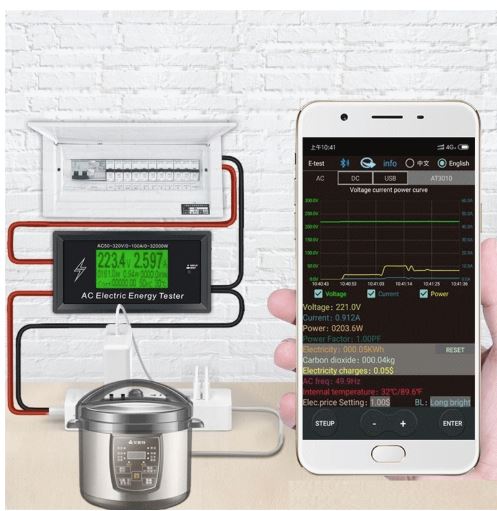
A unit that measure power consumption and provides a Bluetooth option also looks like good value. It is the AT3010 AC50~320V 100A 3KKW Phone App AC Meter. It costs around €15 and can be purchased from https://www.banggood.com .  It will need an enclosure to house the unit and it does not use wifi which is a benefit. I purchased this unit as a test and I am about to set it up.  I will use this meter to monitor the cost of heating the house and also monitor the condition of each storage heater.

Power Measurement

Heat Recovery Ventilation (HRV) Selection Part 2

Selection of the HRV unit.

For those building to the Passive House standard the HRV is independently tested by the Passive House Institute. They provide a full list of certified units at the following link Passive House Certified Heat Recovery Units.   

HRV Efficiency (How is it calculated)

There are principally three methods it seems. One is the Supply method (used by manufactures) and this usually gives a higher efficiency value than the real world values. The Extract efficiency method is used to give a closer to real world value and then the passive house efficiency method which adds the following formulae to the Extract efficiency method.

Pel = real electrical power, W
M = mass flow, kg/h
Cp = specific heat of the air, kJ/kgK

The good news is that it appears if the HRV is certified to the Passive House standard then the difference between the supply method and the extract method  is very small.

In the near future I plan to connect to the HRV unit I purchased and view the efficiency values.

The Passive House certificate shows the following

HRV
HRV Calculation


Cost Efficiency

The most cost efficient unit I came across was the Airflow DV145 passive house certified unit for our 200 m2 house with an airflow capacity of 542 m3/h. I paid around €2200 for it. If one has a smaller floor area then more savings can be made by using a smaller unit. As a self builder technical support was important and their main offices are in the UK.

If one opts for a non-certified HRV unit a 12% reduction must be applied to the manufacturers specification . Some manufacturers might not renew the certificate each year so it is a good idea to ask if a certificate exists. The data must be entered in the planning software for the passive house. For those interested in the passive house planning software (PHPP)  there are courses run in Ireland frequently so I would suggest that one does this 3 day course (typical) and usually one finds the software discounted on the course.

It is an enjoyable course where one can select your own pace (the first time I did the course I wanted to listen and learn rather than calculate the performance of our own home). One such place is http://www.passivehouseacademy.com/

HRV Self BuildTo be continued………


Contact Details:      seamus.sheehy.selfbuild@gmail.com

Heat Recovery Ventilation (HRV) Selection- Part 1

HRV OPTIONS

There are two types of HRV units that I came across -Heat (HRV) or Energy (ERV). The ERV is used principally for recovering humidity  and heat. I selected a HRV unit,

Size Matters

When selecting a HRV unit it appears that one of the biggest mistakes is to select a unit that is too small but still satisfies the current regulations. What appears to happen in the competitive world of quotations is that a unit that just ticks the box comes in as the best price.

In selecting a unit for our home I selected a unit that has a manufacturers capacity of 542m3/h where the floor area of our house is 205 m2. Currently the unit is running at 31% of its capacity and it is maintaining a CO2 (Carbon Dioxide) level of around 700 ppm when the four of us occupy it . I use a stand alone CO2 sensor to measure the CO2 in different rooms. (I have not commissioned the unit yet as the internal doors/glazing are not installed).  

Another advantage of selecting a larger unit is that it can run more efficiently at lower speeds and generates less noise through the ducts or from the unit itself.

Some of the options from the manufacturer Airflow (my unit is the third from the right).

HRV passive house
A choice from one particular manufacturer.

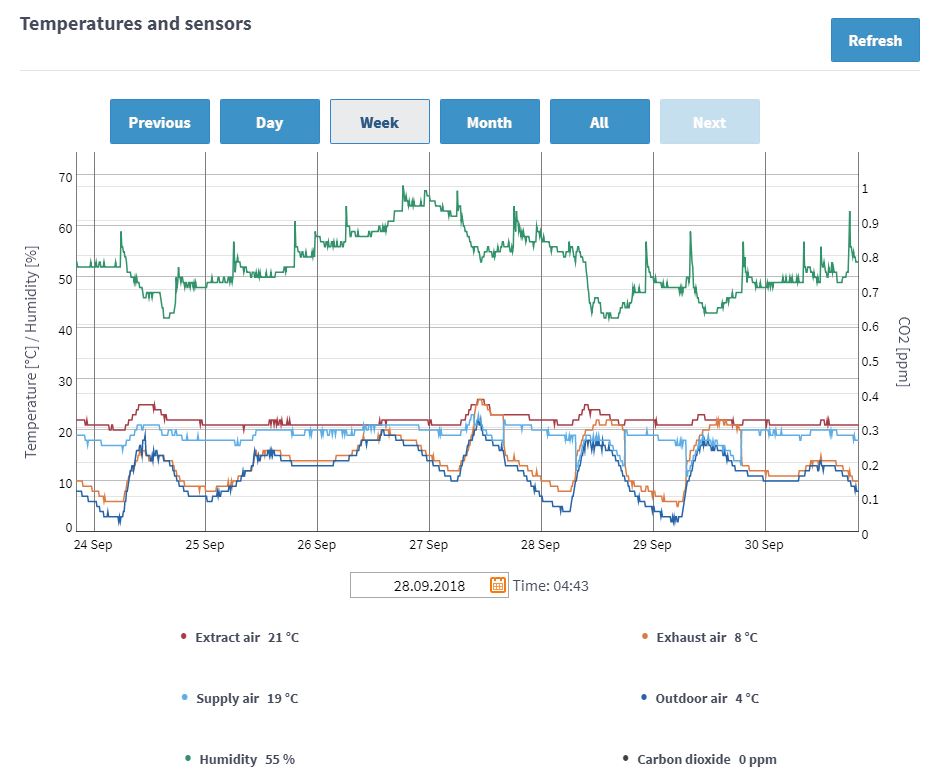
September 2018 performance (with no heating switched on yet).

The graph below gives an idea of how the HRV works when managing heat from the house and supplying fresh air. For the coldest days of the year so far (2 degrees at night-in September) I put the unit into summer bypass mode the next morning (take in outside air directly and pump it around the house) because the sun was shining that day. The winter sun is lower in the sky so solar gain increases in the winter (when the sun shines). The house is made of timber/glulam construction. The main thermal mass is the concrete floor at the moment soon to be covered by a 32 mm thick wooden floor so the response times of house I suspect will change. The floor and wall temperatures are approximately 22 degrees Celsius.

HRV Software review and Control.

Example above of HRV in use in our home.

Sample Data in our home using Google Fusion to visualise the HRV data for a week in October. (see link below)

  • One can select the chart tab and visualise the graph.
  • Use the bottom graph to zoom in.
  • The data is from the 21 October to the 28 October 2018.
  • One storage heater rated at 1.7kwh was used for 5.5 hours a day off peak.
  • The storage heater was switched off for one day on the 23rd October.
  • The graph starts at midnight on the 21 October.
  • Each ref reading is every 10 minutes.
  • The CO2 reading vary between 480ppm and 700ppm when fully occupied.

https://www.google.com/fusiontables/DataSource?docid=14U8eXcMzhritW7dQTPSuBEIYNhyDcayGJUlnuLyi

Filters

All HRV units contain a maintainable part called filters. They have a number of functions.

  • Clean the air being pumped into the house, and
  • Keep the internal components such as fans, ducts and HRV housing clean.

One typically finds one coarse filter and one fine filter on the air supply into the house and a coarse filter on the extract air from the house before the extract fan. The coarse filter is typically a G4 and the fine filter is a F7 (Pollen filter). I installed a 400mm x 400mm  G4 coarse filter at the duct inlet so that I could keep the main supply duct clean. It is a bit more effort to maintain this but it will hopefully minimise the maintenance of the duct.

To be continued………


Air tightness Test-Passive House 0.22ACH

Self Build air tightness test -0.22ach with a volume of 603 m3 @ 50 pascals. 

When one is building to a performance standard the day of reckoning is the airtight test. The reason for this is that when one is pumping fresh air into the house using a Heat Recovery System, rather than relying on simple multiple holes in the wall, it becomes important to control where the fresh air is coming from and where the heat is going.

Airtight Test
Airtight Test


If air is leaking in or out around windows /doors/walls or other gaps in the building fabric then heat is lost and moisture problems in the form of mould can arise or else give rise to damage to the building fabric.

The pressure 50 pascals equates to a 20 mile per hour wind which is not too untypical in Ireland. So if one opts for the Irish  building standard (a minimum standard) this equates to the air in the house changing/leaking 7 times a hour when a wind blows at 20 miles per hour. No wonder people block up the hole in the wall vents .

  • The current Irish building standard  require 7 air changes  per hour (ach) also called leakage at 50 pascals  typically with no heat recovery system As a guidance heat recovery manufactures recommend 3 Air leakages per hour to ensure that the heat recovery system can push fresh air into the house and recover heat leaving the house through its own system rather than through gaps in the building fabric.
  • The passive house standard for a new house requires 0.6 Air changes per hour (ach) at 50 pascals to ensure the heat recovery system works efficiently, ensure that occupants receive the correct amount of fresh air and minimise building fabric damage.

The passive house test differs from the Irish test because it must include pressurisation and depressurisation and use the volume as set out per Vn50 (EN13829).

The Test

Gavin O Shea from Greenbuild was hired for the job.  He is certified/audited by the National Standards Authority of Ireland (NSAI).

The preparation for this entailed sealing all cable ducts and the inlet and outlet pipes for the Heat Recovery System. One also ensures that the shower and sink outlet traps are full of water. The overflow outlet for two water tanks were not sealed off. I did consider a duck valve but it was not in place at the time of the test.

Air Tight Test
Airtight Test


The test using the Irish method gave a result of 0.181 m3
/(hr.m2).

Gavin O Shea calculated that the equivalent size hole that equates to a result of 0.22 ach is approximately 65.25 cm2 (@50Pa) or a hole 81mm x 81mm if all of the leaks present in the dwelling were concentrated into one hole. That is about a tenth of an A4 sheet of paper.

The results of the air tight test can also help determine the selection of the  Heat Recovery System. If the airtight test is lower then more options are available when selecting a unit.

From my research a passive house standard Heat Recovery Unit will cost more because it needs to be independently tested by the Passive House Institute using their test method. Heat Recovery manufactures have also the burden of putting the unit through national tests or international tests with the end result being the customer pays more.  One has also the option to select a non passive house certified unit for a passive house but when calculating the performance value one needs to account for this in the PHPP software with a 12% reduction below the manufacturers performance claim.

If one wants to view certified Heat Recovery Units one can find and sort them at the following link.  One can see for example at this link the capacity (Column- Air Flow Range) that these units have as it is important to select a unit that is oversized for your particular self build. I would compare it to selecting a mini car to tow a caravan up a hill compared to using a larger car. The small car will struggle from an efficiency and noise point of view while the larger car will be quieter and more efficient at the require flow rates.  I will do a separate post on how I selected our Heat Recovery Unit.


Painting

Research

Having carried out some DIY painting in the past I decided this time I would invest in good tools as this was going to be the biggest job to date. This first entailed selecting a brand whose painting equipment is rated highly.  I selected tools from the Wooster product range.

There are a few essential tools.
    • The Pole (I selected a 4 to 8 foot adjustable pole called the Wooster Sherlock GT extension pole ). This tool has a few good features such as snap on paint roller head, an extension that snaps in set positions, a tool to fit screw type paint rollers. A substantial rubber hand grip that made the job easier . The highest point of our ceilings are 3.6 metres and this version allowed me to reach the ceilings directly from the floor. Narrow hallways that are less than the length of the pole plus the roller would make it difficult to use this pole length.


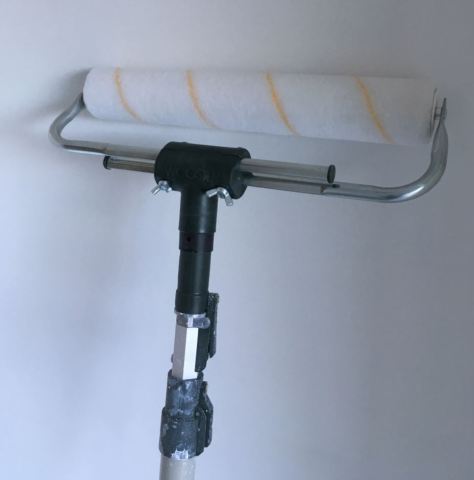
  • Rollers– I selected a 3/8 inch nap (pile depth)  for the plasterboard because of its smooth surface and I tried a 9 and 14 inch roller called the pro-doo-z. The Nap determines the amount of paint applied and the paint texture of the wall surface . The 3/8 inch gives a fine finish. If one used a 1/2 inch nap the roller can hold more paint but the texture is different. After trying the 9 inch and 14 inch roller my preference was to use the 14 inch roller as I found it easier, faster and more stable because it is supported at both ends (see below). I would be tempted to try the contract rollers that are supposed to be faster the next time but the finish may not be the same. One can select the right roller from the web site link Wooster Rollers. 
        • Cutting In– A very useful and time saving tool was the Wooster hand-held Pelican kettle .

          Pelican Kettle

          It is available with liners to make it easy to change colours.  It has a section to hold a cutting in brush and a mechanism to hold a small roller. Both of these are necessary in order to end up with the same wall surface texture as the main roller for example around switches and sockets. I used non diluted paint for the cutting in process. One needs a mini roller also for the Pelican holder.

        • Brush– The cutting in brush I used was the Silver tip wooster 2 inch model. I never owned a high quality brush before and it is working out great.
        • Tray/Kettle-I tried the Tray and the Kettle. My preference is the 25 litre Kettle with replaceable liners. I initially bought a Kettle with no liners and the washing out of the tray or kettle at the end of a days painting is time consuming and  non environmental as one must wash the inside completely . Comparing this to using a liner that one can dispose of in the bin. I know at the end of the day it all is non environmental but using plastic liners keeps everything clean and saves time.
        • Safety Glasses and peaked cap -While painting the ceiling it is a vital item.
        • Fresh Air– While the paint is wet the smell is stronger so ensure that your rooms are very well vented. As I am painting in the winter the house temperature has dropped to approximately 9 degrees.
        • Paint-I used Dulux paint as it has a good reputation for quality.
        • Cling Film-In order to keep the brushes and rollers clean I wrapped them in clingfilm overnight. The roller lasted a week and I did not notice any problems even with this amount of time . One just took of the clingfilm and started again with no cleaning required. It also reduces waste.

Technique I used for painting

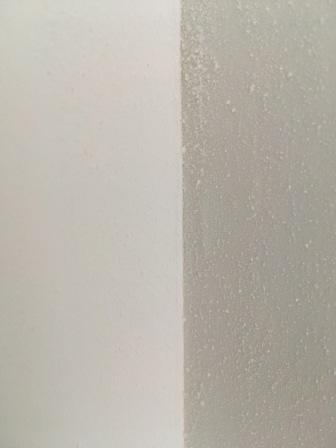
First Coat– For the first coat on the plasterboard I mixed the paint to a 3 to 1 ratio  (one litre of water to 3 litres of paint) as advised.  By diluting the paint for the first coat it is supposed to allow the paint to get a good bond with the paper finish on the plasterboard. I did not use the traditional wet plaster method on the walls. The paint also needs to be mixed in a separate container. One requires a 1 litre container to carry out the measuring. I experimented with a lower ratio of water and I could not see much of a difference with the Dulux matt white paint on the bare plasterboard only that with two paint coats undiluted the finish looked better . If the walls were wet plastered in the traditional way then the water mix appears to be vital.

I started out using the paint brush and mini roller for the first cutting in but later on I just used the paint brush for the first cut and then used the paint brush and mini roller for the second cut in order to finish with the same texture as the 14 inch roller.

Self Build Painting
14 Inch Roller

After watching numerous methods and comparing the comments I think the following is the best I have come across to date  and having used the ideas it it all makes sense. With Youtube I found one has to watch about ten videos and then decide who is doing it right. Below may help.

https://youtu.be/v61PVzLNemk

Imperfections .

When the first coat of paint is applied it often identifies small imperfections in the plastering. When this happens let the paint dry and fill the imperfection with USG or Gyproc ready made joint filler. When this has fully dried sand it by hand and repaint it with a few coats. This method worked for me.


Plaster Board Finish

Wall Finishing and Fire Compartmentalisation

Sanding

The golden rule is-avoid sanding as much as possible by ensuring that the knife finish is smooth at the edges and as close to a final finish as possible.  If one had to do this manually with a sanding block and pole it would be a tough job.

Thankfully over the years people have been improving the tools. I was lucky enough that the builder loaned me his sanding machine.  I just needed a hoover to manage the dust which was picked up free on the free cycle web site. The sanding machine looks like the following:

Sanding Machine
Flex WS 702VEA

Even though the above Flex machine makes the job easier and faster it still is a physical job especially when working overhead.  The hoover was not designed for the above but it worked out OK once the bag and filters were cleaned regularly.

I would suggest safety glasses when working overhead and a face mask at all times.

Technique for Sanding Used

The joints had a second coat of plaster and then a touch up coat was used to remove any edges and at the same time look for and fix any imperfections on the butt finishes (where two boards are joined with no taper edge) or tapered edges. USG 3 Sheetrock (see previous blog) was used for the second and third touch up coat.   I would not recommend the Gyproc joint filler for the second and third coat as it is primarily used for the first coat and it does a great job. When dry the finish is very hard and it would be difficult to sand. There is a Gyproc pro finisher but I found the Sheetrock product very economical and easy to work with for the second and third coat compared to other options.

I used a 150 grit sand paper on the Flex machine and left it at speed 4.   I was expecting that the sand paper would get blocked up but this did not happen. I was advised and found it very important to sand the edges of the joints and ensure that one does not stay too long on the edges as the paper on the plaster board could be damaged.  A light sand in the centre of the joint is how I finished each joint.

Sanding Joint Filler
Edge Sanding of Plasterboard


I also found it necessary to manually inspect the wall after the electric sander as one is too far away from the wall with the sander to spot imperfections. I made up a hand sanding block for this with a wood fibre board angled to get into corners.

Home Made Sanding Block


The angled  wood fibre board worked out better for me than dedicated sanding blocks and I used a pre-used sanding disc from the electric sander.

Self Build
Wood Fibre Board as a sanding block.


Plasterboard Corners

I experimented with the wall corner finishes on whether a sharp edge or rounded corners worked out better. The sharp edges looked like that shown in the top image below and the rounded corner is the image below that. If I was doing it all again I would use the rounded corners as I feel it looks better.

Plasterboard corner finish straight edge. Note dust still on one wall.


Rounded Corner

Fire Compartmentalisation

Typically with internal wooden stud walls there may be gaps between rooms at floor level or vertically. For this reason one may want to ensure that fire compartmentalisation is addressed (a previous blog covered this in detail). In order to do this I have chosen a B1 rated fire foam for the floor gaps. It also has a secondary benefit of reducing sound travel between rooms at these gaps. The foam I used was Olive PU-476.  The price varies and the best value I found in Ireland was at National Seal Systems in Dublin. I also bought intumescent water based fire sealer for small gaps around the edges of the distribution board and vertical uprights where one partition  meets another.

Self Build


Plaster Board Update

Plastering – Taping and Jointing. Tools and Lessons Learnt.

I finally completed installation of the plasterboard with the help of the mechanical plasterboard lifter and I have now just started taping and jointing. I decided on the international method of finishing the plasterboard rather than the Irish method ( see previous blog https://selfbuild.blog/2016/07/10/plaster-board-plan/) . If one is determined to use the traditional Irish method of wet plastering the whole wall I would still tape the joints with paper tape rather than the nylon/plastic mesh. The paper tape ensures the fire proof rating and from my research it is a stronger joint.

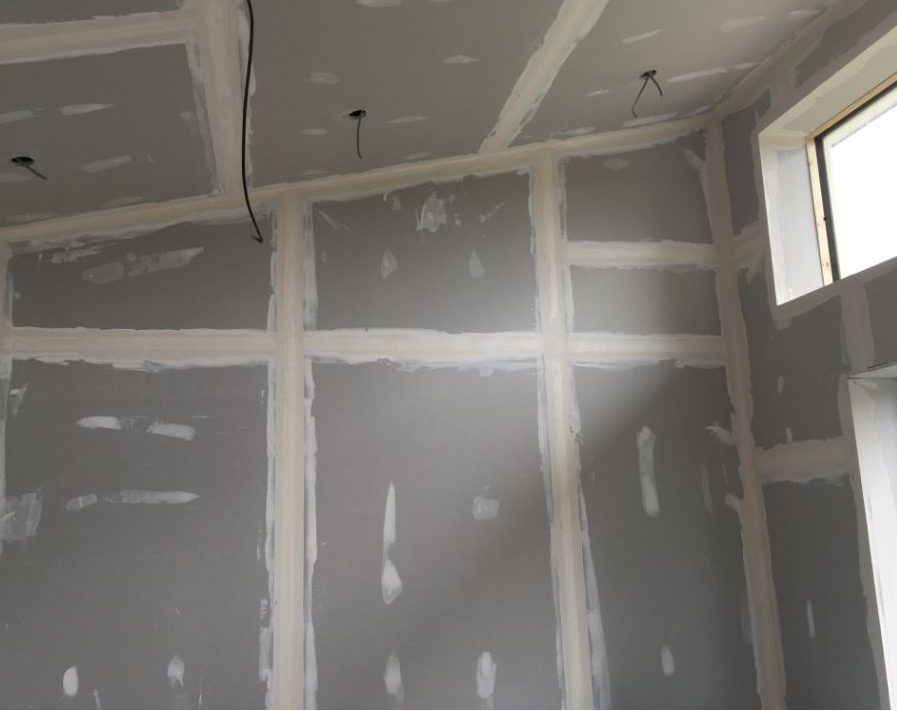
Below is an image of what it looks like when one applies the first joint filler tape coat. There are two to three more coats of plaster filler/compound required to hide the joints completely and some sanding.

Joint Taping
taping joints

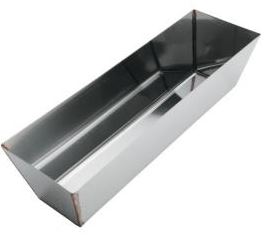
I tried different methods and tools such as using a hawk instead of a mud pan to hold the plaster. For me the 12 inch mud pan worked out the best .


The tape dispenser is more important than I thought. The unit I purchased was a good design on paper but not very practical. If I was purchasing a unit again I would go for the steel design . The current model I am using is as shown below.


For ones own safety one must be able to roll the paper up  after taping the joint as the hanging paper can  become a trip hazard when moving around.  I would try this steel one instead if I was starting again (see below).


Another item is a glove for the knife hand. If one is working with the filler for a few days I have found it to be very rough on the hands. Over time the skin will toughen up I suppose.

Beads

There are two main types for corner beads used for edge finishing . The steel micro edging (first image below) or the paper tape reinforced with steel (second image). I found it easier to use the steel micro edging rather than the  reinforced tape edging. I tried a few methods of attaching the mesh and I settled for first applying the compound and using a few stainless steel staples(the standard ones are not stainless steel) to fix it securely while applying a finishing coat to fully bed it in. Note-ensure that one fully cleans the stapler after doing this.


The steel micro edging I feel is a better method to finish an edge and it is easier to sand and clean when applying wet filler.

Another idea that I did not get to try but it looks interesting is the use of pre-formed corner / edges  using plasterboard. This avoids the use of beads and it is called the ZaapSystem from Prodar.

The reinforced tape comes into its own when one needs to tape two walls that meet with slight angles. The price of this varies from €15 to €30 for the same length.


Fillers

I tried different fillers/joint compounds . Gyproc dry wall filler (it comes in a bag and is quick setting ). One mixes it with water and it requires the use an electric mixer to prepare it. This bag works out fairly economical but the time spent mixing, the dust, washing out the bucket every hour or so is very time consuming. Another disadvantage is that it sets very fast and is very hard to sand afterwards. The colour is also a disadvantage as it does not blend well with the plasterboard. An advantage is that it works out well when fixing the steel micro mesh.

The next product I tried is the Gyproc bucket version (pre-mixed) 15 litre. This is easy to work with but again it is a white finish which will make it harder to blend into the wall and will require more painting. It is also very expensive.

The best product I found and the most economical for the joint is supplied by Greenspan called USG plus 3 (it is an American product) and it comes in a 17 litre tub. It has the best colour blend for the board, it gives a finer finish, and is easy to sand. It does require a small amount of water to be added to make it extra easy to work with (this makes it go a bit further).


Tips

  • When applying filler near floor level increase the width of the filler to ensure that any skirting board lies flush against the plasterboard.


    • Use paper rather than plastic mesh for a stronger and fire safe joint.
    • Practise filing joints in a non critical area such as behind future wardrobes, en-suite or storage room etc.
    • Have a rag /clothe clipped to your belt to wipe away any dried plaster pieces before they get caught in the fresh new compound and leave streaks.
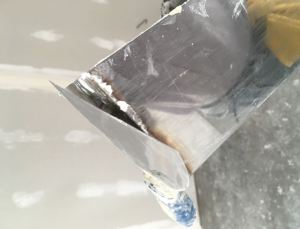
    • Use the 4 inch knife to remove any dried plaster compound or for checking  screw heights. The other knives need to be protected from any edge damage or you will get streaking.
    • If the corner is less than 90 degrees I found it difficult to get a clean edge as there was limited space. In this case I made a finishing tool cut to the angle of the wall and ceiling with a rigid plastic cover to give a smooth surface.

Plastering
Corner Plaster finishing

  • I found it helpful to have the 4 inch knife stuck to the pan with a magnet. It saves some time bending down or climbing down the ladder to get it when using  two other knifes. I typically would have the 6 inch knife for finishing edges and either the 10 inch or 12 inch for finishing butt or tapered joints. The 10 inch stayed in the back pocket .

4 inch Knife stuck to pan

Magnet on pan


  • Fully clean the knifes and dry them at the end of the day.
  • You will notice the difference between good quality knives and low cost knives.
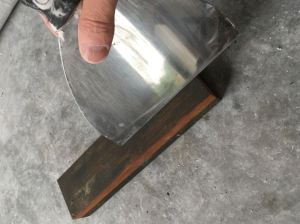
  • If a knife should get damaged by a screw head I used a sharpening stone to repair it.

plastering repair


  • In order to minimise sanding sometimes it is better to re-apply another filler coat to get a perfect finish.
  • For corners I found it easier to use a corner knife (90 degree angle) and feather the edges with the 10 inch knife.
  • Use the 4 inch knife to clean away any small hardened plaster bumps before starting  the second coat.