All posts by Seamus Sheehy

Self Builder Passive House

Internal Partitions and Soundproofing

Partitions

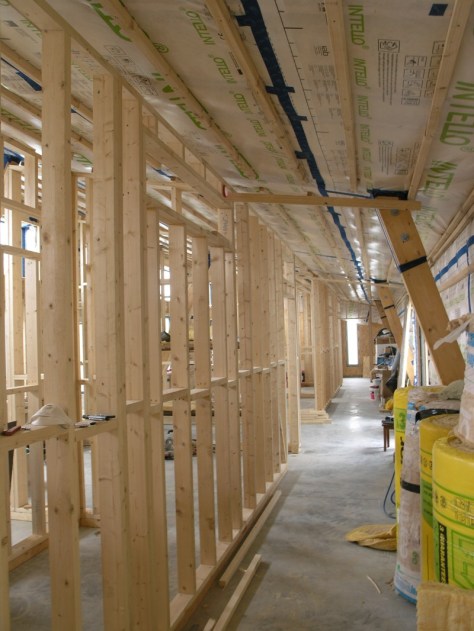
The internal partitions were recently installed.

Passsive House
Passive House Build

Solutions now need to be planned to minimise noise between some of the rooms. The effort one puts into this needs to be balanced with the fact that there will be a 10mm gap under the doors for the air to circulate when using heat recovery.  I might install a supply and extract outlet in the important rooms in order to minimise noise. How much noise will travel in these ducts is for another day.

Proposed Method

All the air gaps (wall to floor gaps, sockets, switches and service cavity) around the partitions need to be filled.

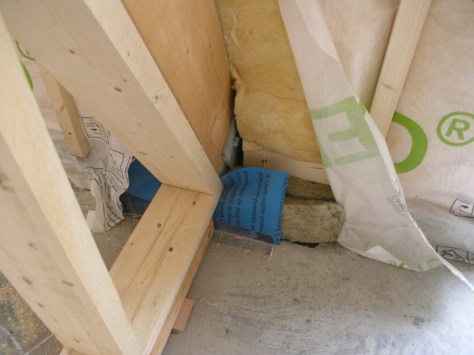
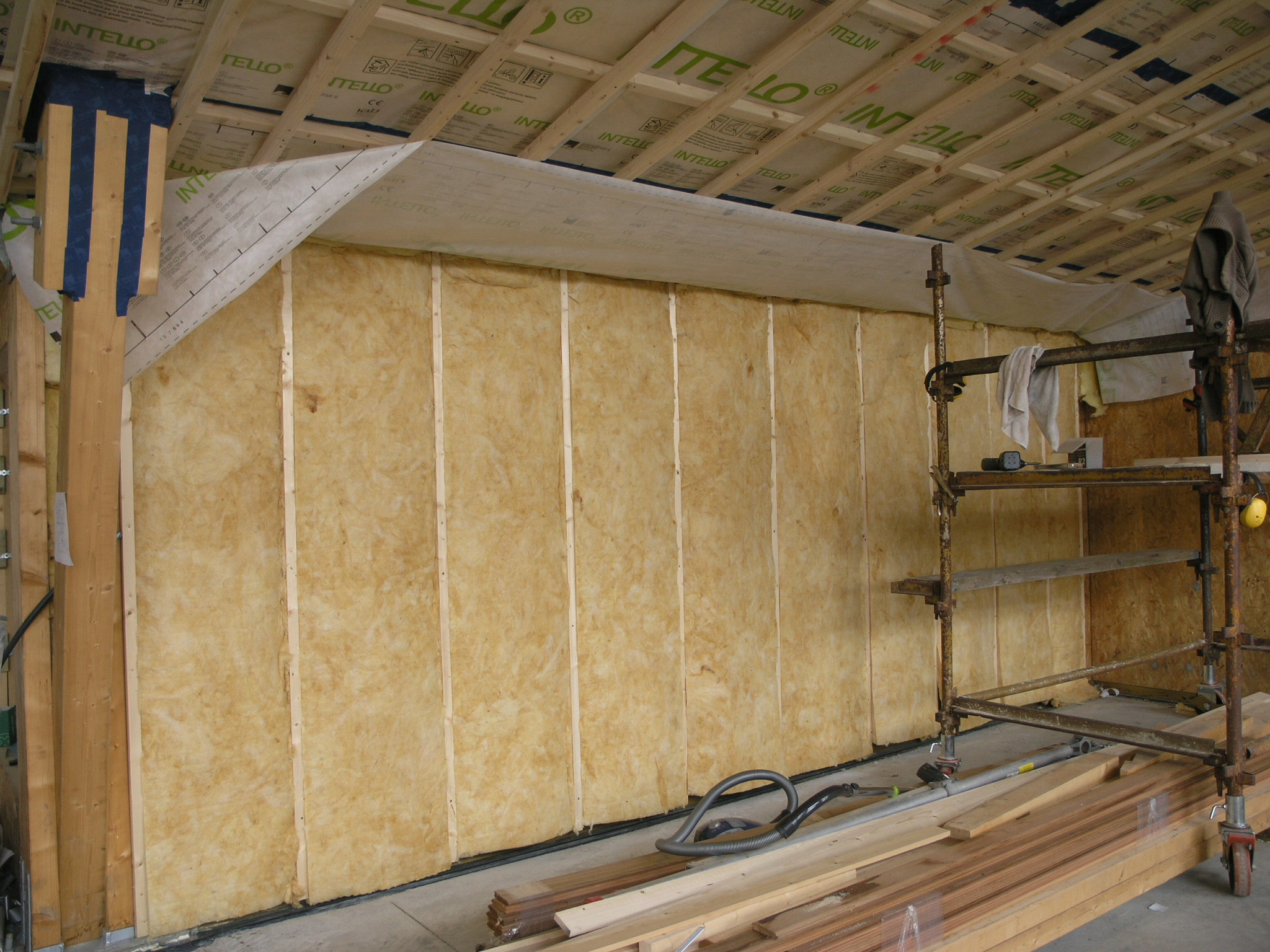
I will fill the ceiling and wall gaps of the service cavity with rockwool (see below).Perimiter Insulation

The method to reduce the noise I am considering for the walls is a product that uses a dampening material between two sheets of plasterboard. One of these products is Green glue and the other is Quietglue pro.  The solution appears to perform very well and I feel it is the simplest method. I plan to take  extra measures between the study and living room such as including rigid insulation (Rockwool RWA45 but I note the insulation costs €37 in Ireland and £13 in England (more research required) .

The performance values used to measure the sound proofing in America is called STC (Sound Transmission Class) and is measured in decibels (dB) against 16 different frequencies. If the sound level was 80dB in one room and the measured sound level in the other room had a  STC of 37dB the sound reduction would have a figure of STC 43.

STC only calculates the dB levels down to a frequency of 125 Hz. One needs to be aware that low frequency sound can exist from drums , traffic and an additional solution may be required.

The performance test data of the Green Glue can be found here

If one was to use one layer of green glue with an extra sheet of plasterboard one would achieve a STC value of 43 for a 4 inch wooden stud wall with 24 inch centres.

If one was to use 4 inch block this would achieve a STC of 44.

Filling a standard 4 inch wooden stud wall (with 16 inch stud spacings) with fibreglass and using plasterboard on each side achieves a STC of around 39. If one increased the stud spacing to 24 inches and filled it with insulation then the STC value would be 46.

If one was to leave out the insulation on a standard wooden stud wall one would achieve a STC value of 34.

A good source of information on sound proofing is at USG (Gypsum)

Robust Airtightness

In locations where the partitions meet the airtight membrane I am using Solitex Plus (see below -blue material). If one used only the airtight membrane it can easily be damaged.

Passive house
Solitex Plus


Thermal Bridges

As part of the passive house requirement one needs to eliminate or minimise heat loss through linear lengths or points around the house. Some of the thermal bridges in my build are typical of other builds. I hope to provide more details in the future.

One of the main linear heat losses is with window/door installations (its connection with the wall frame ). It has been said numerous times that selecting a high quality window/door and installing it poorly can equate to buying a low energy window .

As mentioned before I will use the free software called Therm to calculate the losses. The first detail to tackle is the glazing which was directly mounted in the frame of the house without a window frame.  These windows are 2.4 metres x .9 metre and there are 11 of these mounted on the south face.

The calculation of these linear losses can be expensive to get done so I will be doing the task myself and have it checked by others. I am surprised that good details are hard to come by on the web for free to help the self builder. One of the most time consuming exercises with thermal bridge calculations is drawing the detail. If one undertakes drawing this oneself using CAD (Computer Aided Design) software it can help to reduce the cost of the calculation.

When one needs to come up with a detail to minimise the losses there are a lot of products that help to keep the losses under control. These are semi-rigid insulation products like compacfoam, foamglass blocks, standard insulation, TECTEM, PU or rockwool and fibreglass products and aerogels (which is one of the highest performing insulators being made).

To date there appears to be very few online resources to guide the self builder or provide details that one can use before one starts a build.

Some background and details I found to date on thermal bridges can be found at the following links.

What is a Thermal Bridge

Leeds Beckett University

Scottish Thermal Bridge Details Link

Example of Heat Loss through a glass spacer

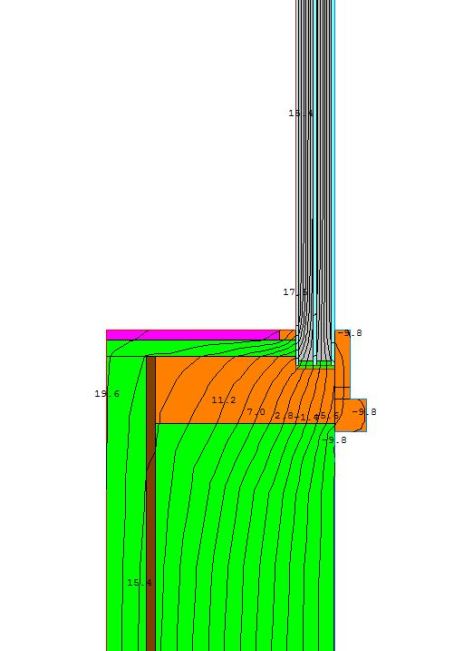
Below is an example of the thermal bridge calculations one needs to carry out to establish the thermal bridge performance values in W/(mk).

  • One draws the detail as a DXF file using a drawing package (or draw the detail manually in Therm)
  • Import the detail into Therm Software
  • Add the technical details such as thermal conductivity of each item
  • Tell Therm where on the drawing to stop the calculation (Adiabatic)-top and bottom of the drawing shown below.
  • Tell Therm what the internal and external temperatures are
  • Go to a spreadsheet and calculate the psi values of the thermal bridge detail for the passive house performance value.

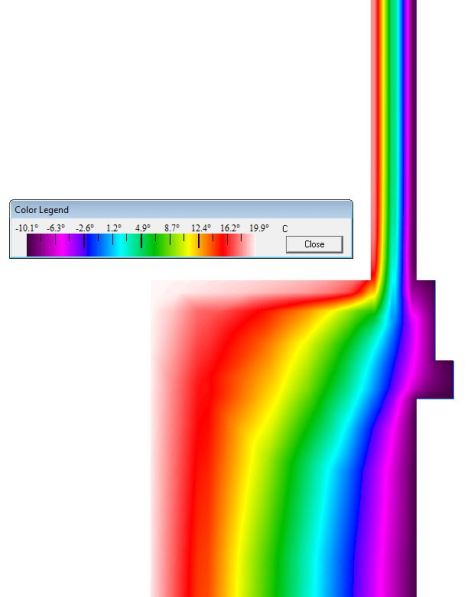
When this is done one ends up with the calculation and an image like that shown below. In this image the glass is shown near the top right.

Drawing Detail


In the next image the colours show the temperature gradients. The purple colour is the outside temperature at -10 degrees.

colour infrared
There is thermal bridge software that one can buy where the software calculates the psi value without using a spreadsheet but Therm is free and there are courses available in Ireland.

If one wants to show the real design and installation details of the thermal bridge values for the Irish regulations rather than the accredited details (without a performance value)  one needs to use a certified thermal bridge accessors but this is not the case for the Passive House Institute.

We can all look forward to the day when standard construction details that are typically used in Ireland are already calculated for the self builder and there will be no need to pay to find out the thermal bridge losses . The Scottish accredited details (see above link) come close to taking the guess work out of construction.


Window Wall Build Up

Batten and Counter Batten fixing

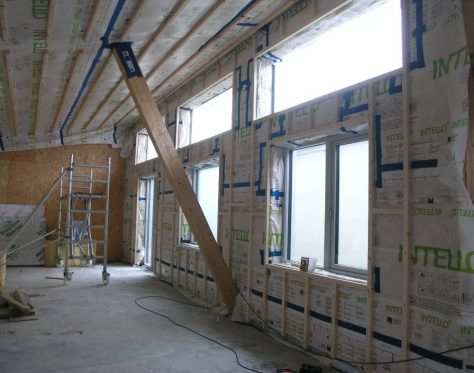
Below are a few images of the build-up I used around the windows. The first image shows the batten (45x40mm planed ) build up on the window wall. I tried to offset the battens around the windows so as to minimse thermal bridges. The wall battens are installed at 90 degrees to the vertical window sections behind the OSB.

Passive House Timber Frame Build Up
Insulation

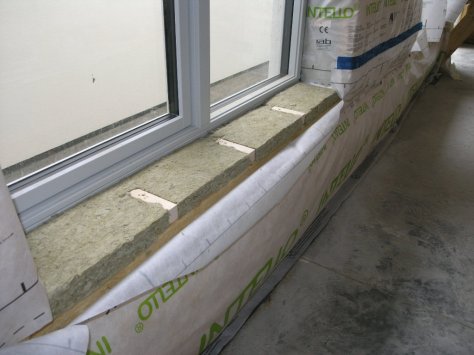
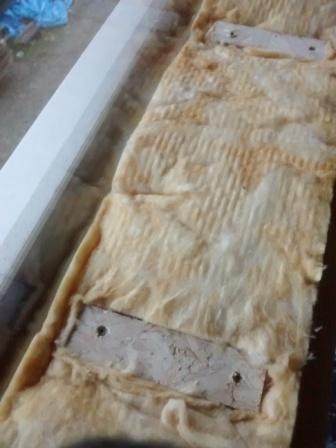
The image below is the RWA45 rockwook installation before the airtight membrane was installed. The wooden strips on the window sill are there to support the sill board. I kept them away from the window frame in order to decrease the thermal bridge. I now plan to use Rockwool RWA45 on all window sills as it performs better at not absorbing water as seen on a previous blog.

Window Insulation Detail Passive House
Thermal Bridge Build Up

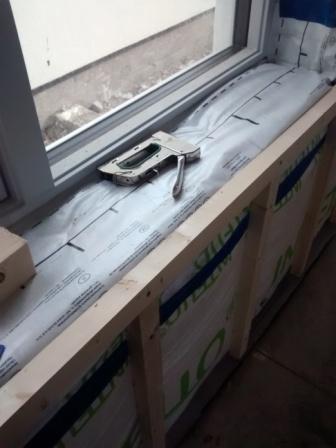
The next image shows the finish layer of battens over the membrane.

Passive House Window Detail
Batten Finish Detail


The window (below) which was installed in the structural frame of the building (I purchased the glazing without the frame 2.4mx.9m) provides light and solar gain. Small lengths of floor board OSB were cut to size in order to build up the insulation and provide a base for the plasterboard finish.

wood spacers for insulation


Insulation is placed up against the glass and I plan to place a timber bead around the edge . Plasterboard will then finish the detail.

glazing insulation for glass in structure


The finished (near finished) wall looks like this below.

Passive House Wall Detail
Window Wall Detail

KNX-Lighting Control Part 2

Lighting and KNX control.

In a previous blog I discussed the advantage of using KNX for the lighting control only.  Some of the KNX control options are expensive so in order to keep things simple and affordable I have decided to use the following devices to control the lighting.  As most of the LED lights are using around 5 Watts of power I will also eliminate the dimming functions and ensure that the layout of the lights in the ceiling can be switched on separate circuits in the larger rooms (a simple form of dimming in a way).

Universal Interface

The hardware required will be a KNX binary input /output device  with 12 inputs/outputs to connect to standard light switches. The advantage is that the cost is reduced by not using a special KNX light switch.  A single KNX switch can cost up to €100 while a simple mechanical switch that costs €2 or €4 approximately can carry out most of the primary switching functions and is designed to work on the KNX system.

My preference and research on the best value for money is a product made by ABB called an Universal Interface US/U 12.2 . Expect to pay around €120 for one of these  which has 12 inputs/outputs (Equates to €12 euro per room). It can also carry out dimming control with a suitable KNX actuator (device that switches the power from a central distribution location). There are numerous other functions built in that are relevant to lighting and indication control.

Universal Interface
EIN KNX Interface

The plan is to mount one of these Universal Interfaces in 4 different areas in the house (The size of one of these units is approximately 52mm in diameter) .  A maximum of 12 light switches will connect to this Universal Interface. It is recommended to keep the cable feeding the light switches to a maximum length of 10 meters (although I have found it works reliably up to 100 meters). I will be using screened alarm cable (6 core) to each of the switches. In this way I plan to leave a spare core for each switch so that other functions can be applied in the future without re-decorating.  I will be using a push to make light switch as this allows one to use the same pair of cables for two way control and optimise the use of the cores in the cable.

Each 12 channel Universal Interface will have its own  KNX 12 channel switch actuator ( see below-it can control 12 different lights using 230 volt power in the building) that will switch the LED lights. One location to source these is http://www.eibmarkt.com

Switch Actuator

For the switch actuator (relay control of the lights) one can select the equivalent 12 channel KNX actuator. If one goes to the above web site or other KNX web sites and enters EIB KNX switch actuator 12-fold, SA.12.16  in the search engine one will find these units. Expect to pay around €230 for one. If one goes to http://www.eibmarket.com they have one for around €239 including VAT.  This works out at a cost of around €20 per room along with the savings in wiring and flexibility in the future as discussed in the previous blog.

actuator

Dimming Option

If one wants to dim LED lights one needs to research a suitable dimmer for the LED light. There  are different technologies used to dim LED lights so one needs to establish which LED lights to use first before committing to purchasing a dimming function. I am aware of two types such as leading edge and trailing edge controls for dimming.  As I will not be dimming the low wattage lights a simple actuator is all that is required.

Building Science and Physics

I recently came across a few videos from America on the subject of building physics. They may help the self builder when trying to figure the wall system, roof design or insulation to use.

The videos are presented by Joseph Lstiburek who outlines the do’s and dont’s in a very direct manner.  He is the founder of Building Science Corporation.

In the videos he references the American method of describing heat loss which is the R value (resistance to heat loss per inch- a higher number is better) while in Europe we mainly use the U value (ease in which heat travels through an object-a lower number is better but it includes boundary air films). The R value is the thickness of the insulation divided by the K value or in the examples  presented by Joseph Lstiburek the R value of 2 of the Irish building is approximately equivalent to a U value of 0.5.

This video starts with the progress for insulating buildings in 1000 years (starting with an Irish Church) and covers the perfect wall, roof and slab and the importance of designing buildings for the climate they are situated in.

Video  (Below)

Commercial Thermal Bridging , LEED Building Problems, Water problems.

Physics Discussed (2nd law of thermodynamics)

  • Heat flow is from warm to cold
  • Moisture flow is from warm to cold
  • Moisture flow is from more to less
  • Air flow is from a higher pressure to a lower pressure
  • Gravity acts down

Quality Assurance-Figuring out what the right thing to do is

Quality Control– Executing it

The building layer order of importance for a wall, roof and slab and the importance of continuity between the layers as shown below in order of importance.

  • Water control layer
  • Air control layer
  • Vapour control
  • Thermal control

The 500 year wall-Keep the water out of it. Allow the vapour to get out from the inside or outside if it gets in. Keep the air out of the wall from the outside and inside. Put all the thermal layers on the outside and put the cladding on the outside.

He also analyses the LEED energy standard.

To Vent or not to Vent (Roofs-cold, warm and SIPS)

This video covers venting and airtightness of SIP roofs.

What happens when one uses a white roof membrane versus a black one.

Building Enclosures

Why increasing insulation is a game changer in the future . Moisture and durability issues that lie ahead because of extra insulation.


Wall/Ceiling System

Wall/Ceiling  Electrical Services

For the internal wall build up I am using a double batten wall system. This wall system allows one to easily install services. In a previous experiment on building a workshop (used as a means to experiment on a small building before commencing the house) I installed a single row of horizontal battens on the OSB board. This made it very difficult to run services that need to run vertically. I had to install metal protecting plates and cut notches in the wood in order to ensure that I did not damage wiring due to the final layer of plasterboard screw fixing.

When one uses a counter batten system it facilitates running services such as power,  lighting, phone, internet, alarm etc without the risk of screw damage. This system also helps to reduce the cost of installing these services (see the image of a cable behind the batten below).

One can make use of a wall system like this if a soft insulation such as cellulose or fiberglass is behind the final batten which will support the plasterboard finish.

Wall Cable Routes
A row of battens run vertically behind the membrane in order to facilitate running services.

When working at ceiling level one may need to use a counter batten system in order to allow for recessed lighting otherwise it will mean installing special electrical enclosures cut into the airtight membrane. I have installed counter battens to a depth of approximately 90mm in the living and kitchen areas for LED downlights (see the previous post link on the 26/04/2015). In the bedroom areas I will only use a single batten system in order to install hanging pendent fittings.

Floor Level Insulation.

At floor level I installed Rockwool insulation for two reasons -one was to minimise the thermal bridging (heat loss around the wooden sole plate that the timber wall sits on) and the second reason was to minimise the damage to the insulation if there was a water leak.

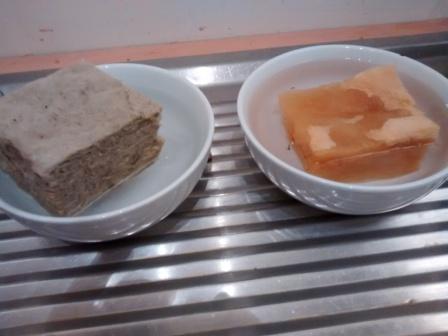
I carried out a test where I placed 50mm of Rockwool RWA45  (product in the left bowl) and Metac (fiberglass-product in the right bowl below) in water in order to see what would happen if there was a leak. The Rockwool absorbs very little water but the fiberglass sank and became completely saturated and would possibly never dry out. Both insulation’s were submerged initially and then left for the duration of the test.

Rockwool Metac
Rockwool versus Fibreglass for water damage.

Below is an image of the Rockwool installed at floor level under the fibreglass in order to minimise the risk of insulation damage at floor level and minimise thermal bridging.

Rockwool
Rockwool Installed at Floor Level (green colour)

Airtight Membrane Installation

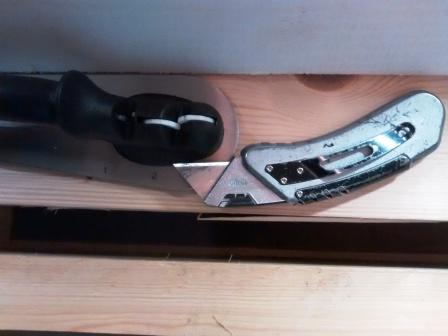
When installing the airtight membrane I was surprised how quickly the knife goes blunt. Rather than using the disposable knives and blades I now use a sharpener with the knife.

Knife and Sharpner

Windows (Part I)

How many times did we see on Grand Design or other home build programs the stories of things going wrong with the windows/doors. Now after going through the process hopefully the following may help other self builders.

Technical

First of all the technical detail. The most important element of the windows is the glass. Some important functions-

  1. Capture heat (free energy) from the sun in the winter/autumn/spring to heat the house. (Called the g value)
  2. When the heat is captured or created in the house minimise the loss through the window (Called the Ug value for the glazing. )The Uw or U-value usually includes the whole window (including the frame ) but be aware that some window company’s may quote only the glazing value rather than the glazing and frame.
  3. Minimise cold air draughts (cold air descending at the window surface) that one may feel if one sits near a window (this is caused by the glazing not being able to keep the differential temperature between the inside and outside below 3 to 3.5 degrees Celsius. (eliminated by triple glaze systems)
  4. Maintain a sense of light in the room (the light level can be typically reduced by 30% (for triple glazed systems) when one tries to balance the above factors.
  5. Ensure that west facing and south orientation windows are correctly shaded (or by means of special glass) in the summer/autumn so that the house will not overheat .

The type of glass used in a self build can reduce the amount of insulation required in the house. One has to balance the g value ( g value represents the maximum amount of solar energy passing through the glass and 0.0 or 0% represents a window with no solar energy transmittance-if glass had a 53% = 0.53  g factor it would let 53% of the solar heat through. ) with the Ug value which represents the heat loss over a surface area in W (m2/k).

The glass that works in Germany may not necessarily work in Ireland. One needs to balance these two values to suit your house and orientation in the PHPP software.

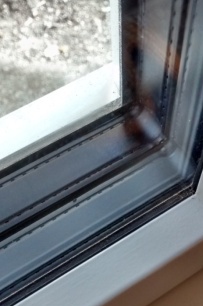
Another important factor is the glazing spacer used between the panes of glass. Most high quality windows will use a thermally broken spacer to ensure that the minimum amount of heat is lost through the glass spacer. One can see this by viewing the colour of the spacer -if is it silver/metallic  then it more than likely has a high heat loss. If it is black it more than likely is a highly insulated spacer.

Window Spacer (Black)


Practical Choice

Options are available in general to have the windows opening out or opening in (with or without tilt and turn).  Tilt and turn mean that blinds and curtains need to be taken into account.

I believe there are only two or three manufacturers of sliding doors that are airtight. Other options are folding units.

  • Review the type of hinges (galvanized, steel, brass etc) and the handles specified (shapes).
  • Some opening out windows/doors have the option of a locking system  to ensure that a breeze will not affect the ventilation or damage them when left open.
  • Establish which doors need external key locks for entry .
  • Establish how many sets of keys you will receive
  • There is an option to have wooden or PVC windows clad with aluminium (evaluate which is more suitable in your environment such as being beside the sea versus fully sheltered).
  • Ensure the Ral colour touch up paint kit is available for small scratches and knocks that happen on site.
  • Establish if you want alarm contacts pre-installed.

Cost Choices

  • A window with minimum openings (more energy efficient) will be significantly cheaper than a window with multiple openings (less energy efficient).
  • A window that stays within the manufactures standard sizes and truck delivery size is going to be cheaper.
  • A window that has a non standard shape is going to be more expensive.
  • Sliding/Folding mechanisms and making them airtight is more expensive.
  • Establish if one can use glazing without a frame in your design (roughly 50% cheaper).
  • A certified passive house window will be more expensive. See link to certified components- Passive House Institute Certified Components

 Importance of Installing Windows Correctly

The frame that holds the glass and those used in passive houses will have an insulator such as cork or other insulation material separating the inside of the frame from the outside climate in order to reduce the heat loss. An equally important detail of a window is how it is going to be installed. This can account for over a third of the heat loss if it is just placed in an opening and secured with a steel band/bracket and then foam filled around the edges. So in real terms money spent on a high performance window/door can be negated completely by installing it poorly.

Below is a video I came across for guidance on installing windows  in a timber frame build (Ireland) with a breathable insulation on the outside and a sketch of an externally insulated block work building later on in the video. There are a number of videos in this series.

In my case I installed the windows in a wooden frame on a ventilated facade. As wood is a fairly good insulator (thermal conductivity of approximately 0.13w/(mk) ) I took the extra step of providing a better insulator around the reveal in order to improve the installation method and reduce the heat loss on the frame as the external cladding is vented with cement board. I am in the process of doing up the thermal bridge calculation using the free software Therm to calculate the actual linear heat loss (Thermal Bridge psi value denoted by the symbol Ψ).  The other type of heat loss is known as the U value and is a measure of surface area in watts per m2 per degree change (W/m2/K).

Where the window or doors were installed on concrete I installed Compacfoam  (rigid insulation) under the window/door and I will insulate and provide an airtight seal up to this material.

Window Frame Mounted on Compacfoam (insulator) in order to minimise the heat loss against the concrete floor.


Glazing (with no frames)

I installed some glazing in the structure of the building without the frames in order to reduce costs. The timber frame manufacturer, Matthew O Malley Timber Limited, rebated the openings and I then taped and sealed the glazing. There were 12 glazing units of 2.4 metres by 0.9 metres approximately.

I installed security tape in the rebate. I experimented with other security tape but found the following tape to be better-Closed cell polyolefin foam tape which conform to BS 7950 Manual Glazing Test from tapes direct in the UK.

Glazing openings with rebate in timber.


As the structure of our home is made with gluelam this helps to minimise the movement in a timber frame build to facilate installing glazing without a frame. I am not sure if glazing can be installed directly in a standard timber frame build.

Other important factors to consider are:

  • air-tightness (the normal passive certified window will have two or three seals mounted in the frame) .


PV (Photovoltaic)-Converting light to Electricity (Part I)

The PV Plan 

I really like the possibility of converting light to electricity. In the spirit of innovation I will simplify the PV system and reduce  the cost by returning to using DC power directly from the PV panels.  As I have no intention of transmitting power around the countryside this is another reason for staying with DC.

The passive house standard I feel helps in this approach by reducing the energy required in a house to a very low level which creates the synergy to make this leap for me to design a DC power heating system for our house.

Solar Background Information

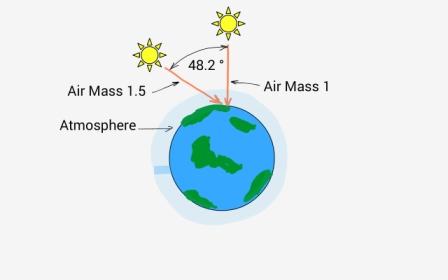
The energy from the sun varies throughout the year due to cloud and the amount of air mass (AM) it has to pass through to reach the earth. When the angle of the sun is low in the sky the solar energy has to pass through more air which means less solar energy is available to convert light into electricity (example winter months).

Air Mass and PV
Air Mass

When a PV manufacturer quotes the output power of their PV panel the international standard is to quote the output power at an air mass of 1.5 . An air mass of 0 is know as outer space where no air exists (AM0) . This is where the maximum energy can be captured if one lived in space. An air mass of 1 is when the sun is at its highest point in the sky (AM1) when on earth. The AM value of 1.5 is around 48 degrees off the highest point on earth.

Measuring the Solar Energy (W/m2)

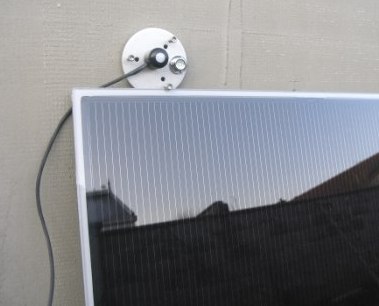
In the winter months from tests I have carried out with my pyranometer ( a device that measures the solar energy-see below) the solar power I am recording with a data logger was between 0 and 400 watts per m2 (It can be higher on sunny days). In the spring/summer months the power can reach 1000 watts per m2 and more.

Pyranometer
Pyranometer for measuring Solar Energy (Sensor top left of image and Solar Panel under test beneath it)

Harvesting Solar energy in the winter months for me is the priority which will entail the correct location and angle of the solar PV panel for the winter sun. The strategy is to try capture as much of the winter sun as possible  by balancing the solar gain of the glass in the south windows of the house (part of the passive house performance phpp calculations) and supplement this with the DC (Direct Current) electricity from solar PV panels to provide space and primary heating etc. It is very noticeable at this stage of the build the real benefit of gathering energy from the winter sun through the glass.  (See previous blog on performance data 23/05/2015).

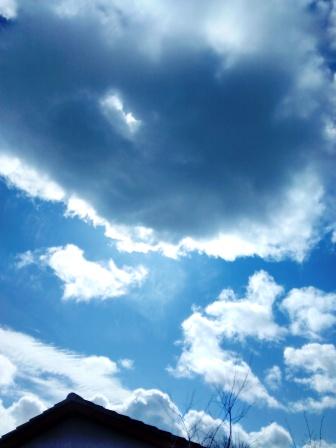
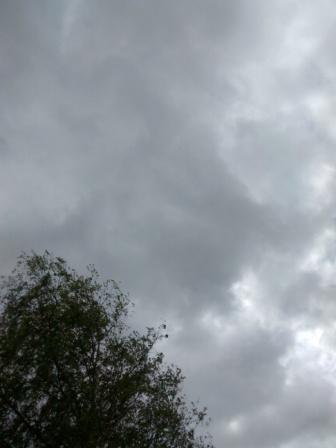
In order to give an idea of the solar energy available I recorded the irradiance when the sun was behind a dark cloud (see image below). This equates to around 200 watts per m2 solar energy. When the sun came out from behind the cloud it reached over 1000 watts per m2 in the month of April.

Solar Energy

Sun behind dark grey cloud is approximately 200 W/m2 of solar energy (above image). Most inverters start to loose their effeciencys at this point.

Solar Power example

Sun behind dark grey cloud is approximately 112 W/m2 of solar energy on the typical overcast day. Most inverters would stop working at this level. 

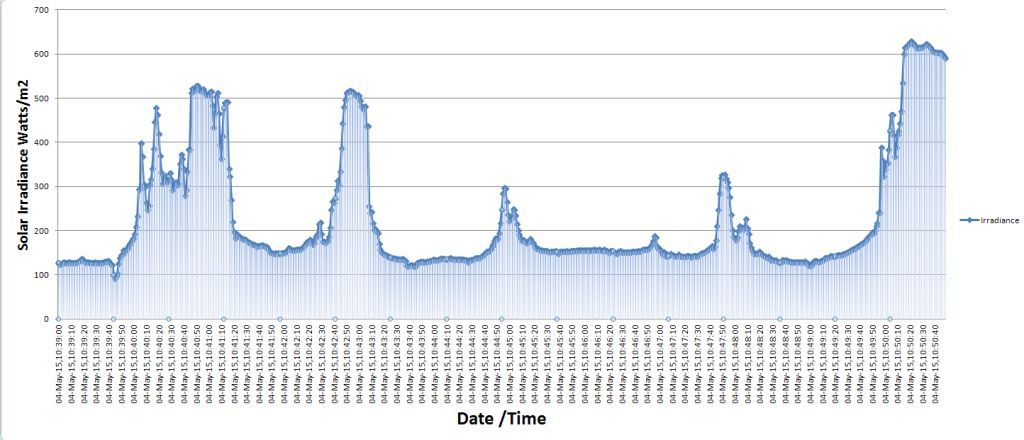
Below is an example of the changes that take place on a sunny/cloudy day in May

Solar Sunshine
Solar Irradiance Level examples over a 10 minute period.

In the above chart one can see an example of how difficult it is for an inverter to keep working efficiently (they work efficiently from approximately 200 w/m2).  The bottom line on the left is 100 watts/m2, The top line is 700 watts/m2 (click on the image to see more detail) .  In the winter time values from around 50w/m2 to 200w/m2 are the lower limits and the upper limits are around 600w/m2.

Self Build Homework (Develop a DC powered Solar Harvesting Unit)

For the above I do need to find a way of maximizing the output power of the PV panels as the iradiance varies. For this I need to develop a simple black box (a small amount of simple components) that will match the solar energy created by the PV panels and maximise the output over the winter months. I am close to having a working prototype to see this in action (all tests look good so far ).

The equipment to be purchased for the above will be 4 solar panels and the mounting brackets. 4 solar panels will provide around 1 KW of power (max). This will cost around €1000. More groups of these will be added in the future. (If any one has 4 spare panels to loan so that I can test the control unit I am building – please let me know.)

In essence I plan to create what I call a DC Solar Harvesting Unit (DCSHU) that will have specific electric power functions around the house.


Battens for Internal Use (Lesson for self builder)

Supply and Delivery of Wood

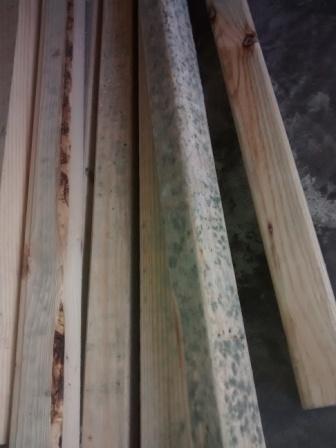
An item I feel worth monitoring is the supply of wood for internal use (untreated wood –no preservative used ). By monitoring I mean the moisture content. For example I received battens for the ceiling fixing of plasterboard. Some batches after 2 weeks grew mould. It was luck and the fact that I was not ready to install it that averted a real problem if it had been nailed to the rafters.

Mold
Mold on wood supplied


I did comment mentally to myself when I was carrying it into the house that some pieces were much heavier than others but that experience did not cause alarm. A symptom that I now know is that they were wet and this has a consequence.

In order to monitor the moisture content of dry wood supplied by building providers on site for the likes of battens that are used to secure plasterboard I will from now on use a moisture meter. When my supply was delivered I did not have a wood moisture meter at hand (they cost 20 to 30 euros). I do now .  Even though the wood was purchased and supplied as definitely dry . Once I had it stacked indoors certain batches were obviously not as promised as mould started to appear within two weeks.  The lesson going forward is have a moisture meter at hand. Test it while still on the lorry and send it back to the builder providers if the moisture levels are too high.

Passive House Exterior Cladding

Exterior Cladding Decision

There were a number of choices when it came to the exterior cladding.  Because the house is a timber frame I went for a ventilated facade with cement boards. The decision for selecting this was based on the following:

  • Because the house is highly insulated very little heat will travel through the wall structure. This entailed changing the wall build-up on the advice of our timber structural engineer. On a normal timber frame one installs a rigid OSB board on the outside and this then would typically be covered with a membrane and then battened for the cement board or tied to block work. When the timber structural engineer carried out a Wufi analysis (hygrothermal analysis-how the wall behaves with our humidity levels in Ireland) he advised that the structural strength of the OSB board would be affected if we placed it outside because of moisture build up. The OSB was then placed inside with only the vapor barrier on the outside and then the outside was battened /counter battened for the cement board.
  • My preference was to use block work on the outside (because of cost advantage) but this showed up in Wufi as needing large amount of ventilation and it would not perform as well as a cement board or a wood finish wall.  It seems that if one used block work the heat from the sun would take a long time to reach the ventilated space. The ventilated space it appears requires two pieces of physics to work correctly-Thermal Buoyancy (warm air rising and creating a drying out environment)  and Wind for the ventilated cavity. Relying on one of these I felt was a risk I did not want to take.
  • The other reason for selecting a ventilated cavity versus using an externally insulated (with a non breathable product) was the provision of a second level of protection to the wall structure if there was a fault in the external waterproofing . If for example water leaked in around a window detail it would dry out if the wall was ventilated but if water got in behind a wall that was externally insulated with Polystrene/EPS/PIR/PU  the opportunity to dry out was I felt limited.

By selecting a cement board (around 12mm thickness) if the sun shines on this  it would within a very short period of time let the heat transfer to the inside of the ventilated cavity and increase the drying out of the wall and also keep the insulation dry so that it can perform at its rated value.

Some Details

The membrane was glued around the external structure of the timber frame and wall to ensure that no wind would be blowing over the face of the insulation ie. Minimise thermal looping.

Orcon F membrane
Membrane glued with Orcon F to concrete and wood structure


The membrane was placed over the Insulation and glued to structure as seen above.

Metac Insulation, Passive House
220mm Metac Insulation placed between external structure before membrane applied.


External Membrane applied over Insulation

Solitex WA
Membrane covering Insulation


Battens for Cement Board Cladding

Preparation for Cement Board Cladding
Counter Battens On Window Walls


Aluminium ventilation vents for walls.

Wall ventilation for exterior Cladding
Aluminium Ventilation Grille


Cement Board sample

Cement Board

Cement Board Sample

The Cement Board is screwed onto the battens with stainless steel screws. A base coat and mesh is applied first and then a primer. The final finish is a Ral colour acrylic render to make the cladding water proof. If one has a walls facing south west and they are subjected to high rainfall it may be better to install a Silicone Silicate render or check that a chemical agent is included to reduce/eliminate algae growth that can appear as a green discoloration on the render over time.

Acrylic Render
Acrylic Render Finish

The overhang underside was also clad with an acrylic render.  The image below shows the overhangs shading the top windows. For example by around 9:30 AM in June the top windows are completely shaded for the sun and by 14:30 all the lower windows are in shade in order to protect the building from overheating.

Inter-connector between two buildings with 1.8m Overhangs.