Category Archives: Heat Recovery

Actual operation and performance of the Air to Air Heat pump in a PHPP designed passive house-Part 3

Background– As previously discussed we had used two storage heaters to heat the house. The capital cost of this heating system wa €70. The passive house standard requires a heating load of approximately 1 Kwh for every 100m2 on the coldest day of the year. With the increase in energy prices and the slow pace of global warming the off peak electricity costs have risen from below 9 cents to its current price of 19 cents. We then made the decission to install an air to air heat pump as shown below that would reduce the real cost to approximately 1/3 rd of what we use to heat the house. The unit cost approximately €700 to buy and approximately €1000 to install.
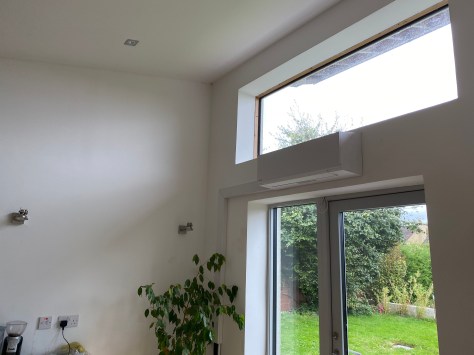
In this blog I will discuss the learnings from the use of one air to air heat pump to heat a 200m2 house designed with the PHPP software to the passive house standard. The location to install the internal and external unit is very important. What is not covered in the passive house standard I feel is the dampness in Ireland that penetrates the human body to the bone. The operating design temperature of the passive house is generaly 21 degrees celcius. We found we needed 22 degrees for the living room and 18 degrees approximtely for bedrooms. The kitchen/dining room temperature will be explained below.

How to deal with the Irish Weather

Irish Self Build Blog
Thawing Out in Ireland -AI generated

The other factor when one installs a central heating appliance whether it is a stove, an air to air heat pump or an electric fire in a passive house is I feel is to ensure more heat is available in one particular room to thaw out. This I feel is a good thing for the Irish climate because we found the constant temperature of 21 degrees one was slow to heat up when we came in from the cold. I feel one needs a stronger heat source to drive that initial dampness out of ones bones. We can all relate to standing in front of a fire to thaw oneself out, this can take the form of standing in front of a fire, a stove or an aditional heater. In our case we used the air to air heat pump by installing it in a selected room.

The location is important because the air to air heat pump does blow out warm air and this would be uncomfortable if it was installed in front of a seating area. Our selected location was the kitchen /dining room and aimed between two worktop islands in the kitchen that normally only has foot fall. In the dining room/kitchen I also installed two seperate air supply ducts (92mm each) with one extract duct. This also benefits in ditributing the heat throughout the house as more air is supplied into the kitchem/dining room rather than extracted. Most of the extract air ducts belonging to the Heat Recovery Ventilation (HRV) unit are also at the far end of corridors of each living space which means that air has to be drawn from the supply areas to the extract areas for ventilation.

The first room we go to if we encounter that outside cold damp Irish weather is the kitchen/dining room where the air to air heat pump is installed. The temperature in this room is around 24 degrees which is then dispersed to the rest of the house by the means outlined above. As it is a single storey house the heat does move around slowly with the help of the heat recovery unit. If it was a two storey dwelling with a better form factor then I would imagine the heat would rise to the bedroom areas easier if one wanted higher temperatures than what we use.

I also experimented with the extract and intake fan speed rates of the HRV as this affects the temperature of the house. If one increases the HRV ventilation rate higher than one needs for a healty air supply then more energy is used by the heat pump to keep the temperature at the levels required.

The other factor to take into account is that we found that if more doors are closed then the distribution of heat can be controlled in the house. For example when measuring the co2 rates at night in our bedrooms we found that we needed a higher air flow when more doors are closed around the house. What we found works is that if we reduce the HRV fan speed during the day (which reduces the heating load of the air to air heat pump) when people are using more of the house and increase the HRV at night because more doors are closed this works. So simply by closing and opening doors one can control the temperature of the house -for example if we leave the TV room door open during the day the heat enters that room. If one closes the door then the temperature drops to 1 to 2 degrees less than the rest of the house.

We also recently installed a simple electric hop extraction unit with a carbon filter that is not ducted to the outside to reduce cooking smells around the house because more air is supplied to the kitchen/dining room than extracted .
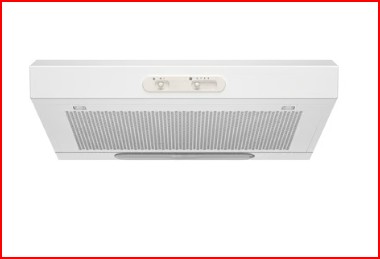
I think one also needs to have an extraction unit for air fryers as this is now more widley used than the hob to reduce the cooking smells being dispersed around the house. This will be a seperate project to be accommodated for when we install a new kitchen .

The performace for the Samsung 1.6 KW air to air heat pump over the month of November 2025 is as follows .

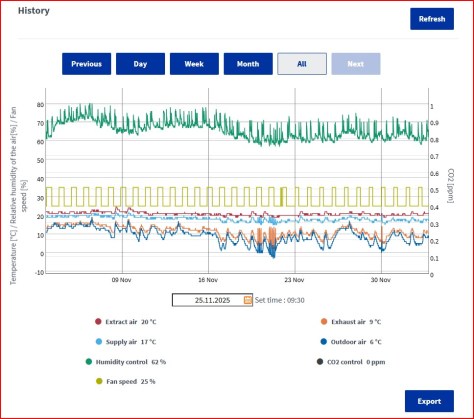
The electricity usage from the 3/11 to the 3/12 2025 was €1.60 a day when one takes into account the current night rate and day rate of 19 cents and 29 cents. The lowest outdoor temperature recorded was -1 degrees celcius . The total power consumption was 184.11 KWh which equates to approximately 6 kwh per day to heat the house to the slightly higher temperature of 22 degrees in the main living area and the dining/kitchen room to 24 degrees 24 hours a day . Below is the plot of the air temperature recorded by the Airflow Adroit DV145 HRV unit I installed . The bedroom temperatures were approximately 18 to 19 degrees celcius.

HRV Data November to December 2025
SOLAR PV electricity offset

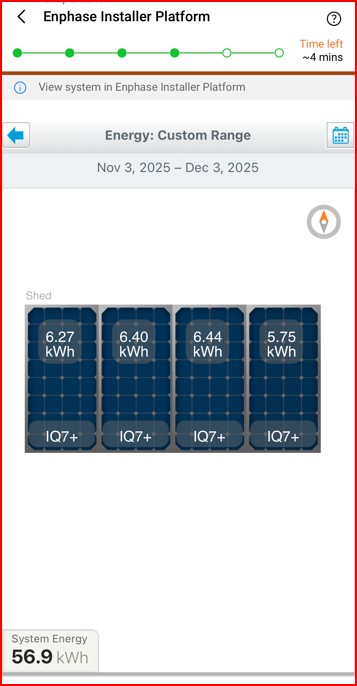
I have installed 3kw of solar PV panels and plan to add another two panels in the comming weeks. Solar PV panels can now be purchased for approximately €60 each (450watt). As I use the enphase micro invertor system the installation is easy to expand as discussed in another blog. The only disadvantage in our house is orientation as most of the solar panels are pointing north at 12 degrees while in order to maximise the solar gain of winter sun one needs 60 degrees panel orientation in a south-east direction. Even so for the month of November above 56.9 KWh of electricity was generated. If I was to offset the electricity generated the cost of heating the house would drop to around €1.02 per day when using the day time electricity rate of 29 cents per kwh.
Solar PV Blog
Group 1
SOLAR PV Blog

CO2

I started recording the co2 readings this month in the hallway rather than in one particulat room. A new co2 unit has been ordered so that I can get seperate reading for different rooms. The co2 readings varied from 672ppm to 1000 ppm in the hallway as the house is open plan with no doors in the kitchen/dining , the living room or onto the hallway.

Air to Air heat pump

For all the above measurements I set the heat pump to 75% capacity and a fan rate of 2 (4 available to adjust the air flow speed) . My undertanding is that if one can set the rating to a lower output capacity this extends the life of the heat pump. Currently the temperature setting on the heat pump is set to 23 degrees in the kitchen/dining room.

Air to water cylinder-The next plan is to install in the kithen/dining room a small air to water cylinder to reduce the cost of heating water. Some of these units have a seperate coil where one can connect solar hot water panels with drainback or vacuum tubes to get free water heating in the summer months. We currently heat the water on a night time electricity rate of 19 cents. While this electric element is a simple low cost method and easy to maintain with the lowest installation cost -the long term cost of electricity is only going up. The plan is to reduce this rate to a third of the price with a unit like that shown below.

heat pump water
Water heater Heat Pump

To be continued…

Using a Heat Pump (Air to Air) to heat a house-Part 2

Other advantages of an Air to Air heat pump compared to air to water heat pumps is the ability to supply heating when it is required and quickly switch off the unit if there is solar gain in the winter (the sun has been known to shine in Ireland in the winter months). The air to water heat pump will have a slower response time through the concrete floor.

Installation-The installation of the internal and external unit needs careful design/planning. Both need to be considered at the same time. The factors to consider for the external (Inverter) unit is a location that is not subjected to high winds (higher winds will mean lower temperatures during the heating season and reduced efficiency), mounting the external unit at least 100mm (I used 300mm) from the rear wall (restricting air increases the energy usage). There should be no air flow restrictions in front of the unit either. Mount the unit on a secure and flat surface (the external inverter requires a flat surface so that compressors are balanced to reduce vibration). Vibration leads to lower reliability. The length of the pipework also needs to be considered and noise levels. The maximum noise level for our unit is 61db if on full power.

The external unit requires an electrical isolation switch and a condensation drain for the cooling season (it removes moisture from inside the house).

Power Consumption-The maximum power consumption of the external unit is 1.6kw with a typical power consumption of 1.08kw to produce up to 4kw of internal heating. Typically a passive house requires 1kw of internal heating for each 100m2 on the coldest day of the year . Our home is 200m2 so 2kw is required. The 4kw output power will allow more heat capacity if required. Most Air to Air heat pumps have an option to control the output power using the remote control. One can reduce the power to 50% or 75% of its rating. I will set ours to 50% for year 2 (2024-2025) which approximately equates to a max heat output of 2Kw on the coldest day of the year. This has the advantage for passive house builds of increasing the life of the Heat Pump compressor and ensuring the unit does not use more power than is required. It will also reduce the noise level by 4db (which equates to a reduction of noise by approximately half).

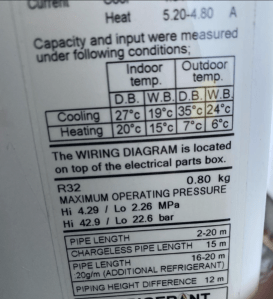
Typical Operation-The operating temperature range of the external inverter is –15 degrees to +24 degrees in the heating cycle. The typical internal heating temperatures achieved for 6 degrees and 7 degrees outside temperatures are shown below. Most heat pumps will also have an automatic defrost cycle when the external unit freezes over due to low outside temperatures. No heat will be delivered inside the home during this cycle and it only lasts a short period of time. If a house is designed with the passive house software (PHPP software) it could take a day or two for the temperature to drop significantly due to the highest air tightness standard in the world (0.6 ACH), quality control around the building fabric and designed to a performance standard.

It is also important to mount the unit above ground level so that snow does not block the unit from functioning. A HO7RN-F (A rubber/Neoprene flexible cable) 4 core cable is required to connect the outside unit to the isolation switch (red switch shown below) which in turn requires another isolation switch inside that in turn controls both the inside and outside unit.

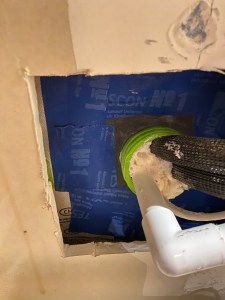
Cables and Ductwork-The cables and ductwork installation for a heat pump with a timber frame construction requires care during installation. When locating the cable and duct route through the wall use a narrow hollow pipe to find a path through the insulation and then drill through this pipe. If one uses a drill on its own with fibreglass insulation will wrap itself around the drill and leave thermal gaps in the wall and result in thermal bridges. The method I used is shown below. I used a rubber airtight gland to seal the larger duct. Ensure that this hole is mechanically sealed during the interim works from any rodents entering your build.

Power Usage-For year one of the installation I experimented with different settings -example using a high heating mode during off peak lower cost electricity and then returned to lower heat output during day. For year two I will set the unit at 50% of its output heating capacity and try an option called ECO mode which automatically reduces the temperature over time. For the last two weeks in this mode (October week 1 and 2) the unit used 20Kwh (€5 @ 0.25 cents per Kwh) to heat the house. The input power used by the air to air heat pump was approximately 300 watts when heat was required. The plan is to increase the number of solar PV panels to offset this 300 watts during daytime use. The power consumption varies as the external temperature changes. In the first year we used between 28Kwh per week up to a max of 50kwh during the first year of experimentation during the winter heating season. A power meter is now installed to record the daily/weekly and monthly power usage as shown below.

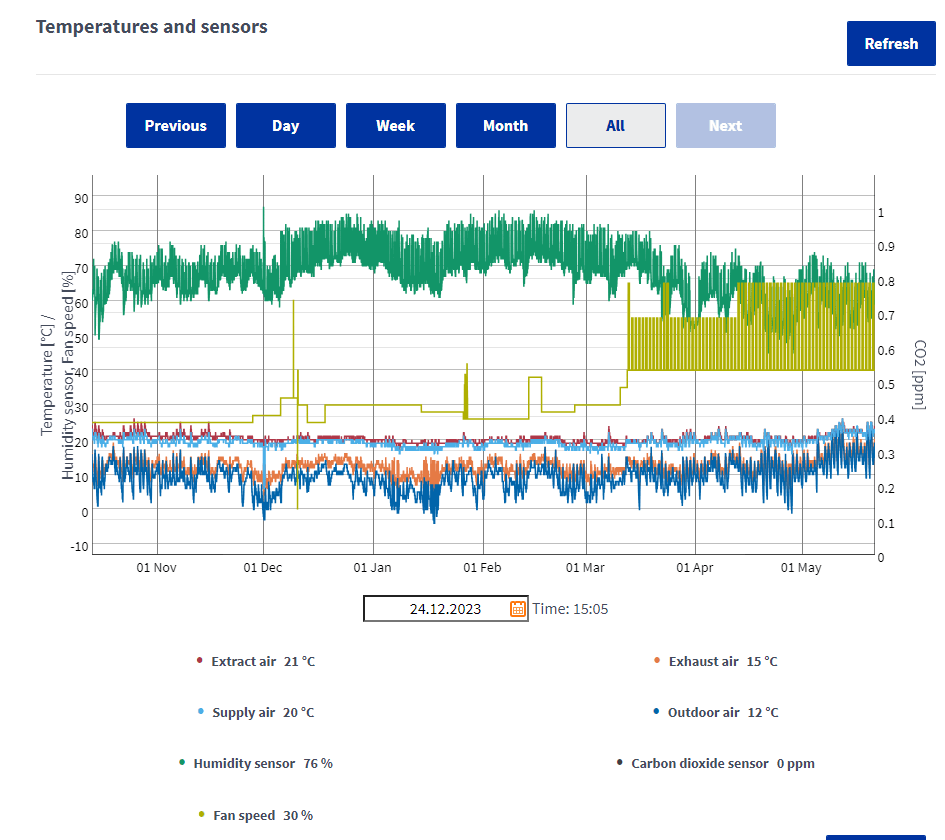
Below is the HRV (Heat Recovery Unit) temperature /humidity plot over the 2022-2023 winter period with the air to air heat pump. I reduced the HRV fan speed to minimise the amount of energy consumed in the winter time and increased it at the end of the winter season as shown below .

Internal Unit-The internal unit requires a height above floor level of 2.4 meters and at least 65mm clearance above the unit. In our installation there is approximately 1000mm clearance above the unit to allow the unit to blow air upwards to ensure a more balanced room temperature and air flow in the room. This is a built in function of this particular unit .

Further Experiments and Research-I am also experimenting with a secondary heat distribution unit to improve heat flow around the living area of the house in year 2 in order to optimise the temperature differences one finds at ceiling height versus floor temperature.

Heat Recovery Ventilation (HRV) Selection Part 3

Mounting of HRV Unit

Different HRV units have different mounting options. Some are floor only, wall only or ceiling or all three. Some units like the Airflow DV145 that I purchased can be mounted on the floor or wall while smaller Airflow units can be mounted on the ceiling, floor or wall. One needs to make sure that there is space underneath for the condensing water outlet.  If the unit is mounted on a wall make sure that vibrations do not interfere with noise sensitive rooms such as bedrooms. I mounted ours on a sound proof and isolated base and used other sound proof methods to isolate it from an adjacent room.

In the early stages of the build the fresh air inlet and stale air duct positions were selected with a spacing of over 2 metres. If the supply and exhaust ducts are too close this can interfere with the correct operation of the HRV unit. This entailed finding an HRV unit that would be flexible in the options available to simplify the space required for the main ducts and keep the runs as short as possible. The lengths of the supply and exhaust ducts play a big factor in the efficiency of the whole system. The Airflow unit comes in a right hand and left hand model. I found that different manufacturers have different duct layouts even though they have Right Hand and Left Hand models.

DATA from the HRV with the Post Heater On

HRV Data
HRV data February 2019 with post heater on

One can see from the above graph that with the winter sun I needed to switch off the heater and switch to summer bypass as the weather improved. The next plan is to automate the bypass mode when the solar irradiance level measured in W/m2 and temperature exceed a set value then the HRV would automatically switch over to the summer bypass mode as one is gaining solar heat. Update-2022-We found it easier and more economical to switch of the post heater permanently and set a base heating load of 1.35kw (200m house floor area) for the winter and manually switch on a 600 watt electric oil heater for days or evenings when the solar gain did not happen. In this way there will be days when one is not in the house and it is proving to be effective also. Also as the house id energy efficient the room heats up quickly. 

HRV Soundproofing

As the internal fans are to the rear of the unit I added a small amount of soundproofing as an experiment. I was able to reduce the db level from 49 db to 44 db. Each 3 db approximately equates to twice as loud or twice as quite depending on whether you are increasing or decreasing the level.

I mounted the unit in the hallway entrance so extra sound proofing was required. If one has a utility room then  extra sound proofing would not be necessary I feel.

HRV Efficiency

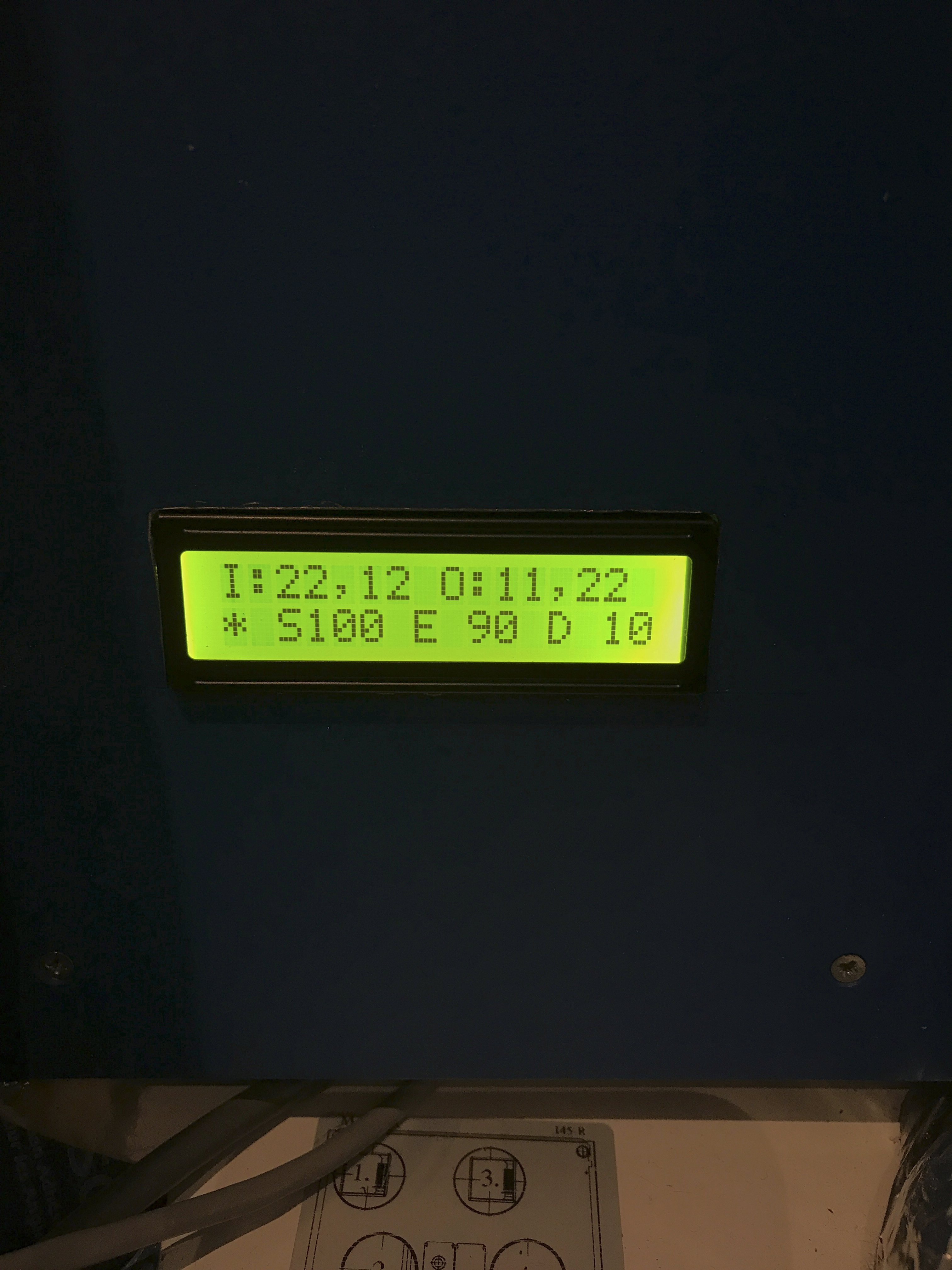
Following on from the previous blog I had a display panel built that calculates the HRV efficiency using the supply method and extract method by means of the Modbus data connection available in the HRV unit . In the Image below one can see S100 (Supply method for calculating efficiency) and the E 90 (Extract method ) as a percentage.  The supply method is the one typically used by manufacturers in brochures. The D  displays the difference .

HRV Efficiency
HRV

The top line displays the temperatures of the Inside air and the air leaving the house followed by the Outside air temperature and the supply air temperature to the house.  When the post heater is on the efficiency calculated with the supply method sometimes displays a number greater than 100% as the heater is built into the unit and mounted before the thermostat.  The extract method for calculating the efficiency is a closer representation of the real efficiency and it is similar to the passive house method (uses the same principle ). The extract method does not use the supply air temperature in the formulae.

Access for repair and maintenance.

Some HRV units require side panel access so ensure that you have enough space to get access to fans/ filters for cleaning and maintenance . The Airflow DV145 can be fully maintained from the front cover so it can be fitted in a corner space without restricting future access to internal parts. The filters are also maintained from the front panel.

Functions and Benefits

When selecting a unit- what was important to me that there was an integrated summer bypass function in the unit,  software control by a smartphone with data capture (a manual control panel-is an extra cost and another item that could fail) and an integrated post electric heater.  Airflow also sell a ground source heat pump option connection to the HRV which I did not purchase. For those installing a stove / fireplace one requires a Fireplace function built into the HRV . The Airflow DV145 has this function.

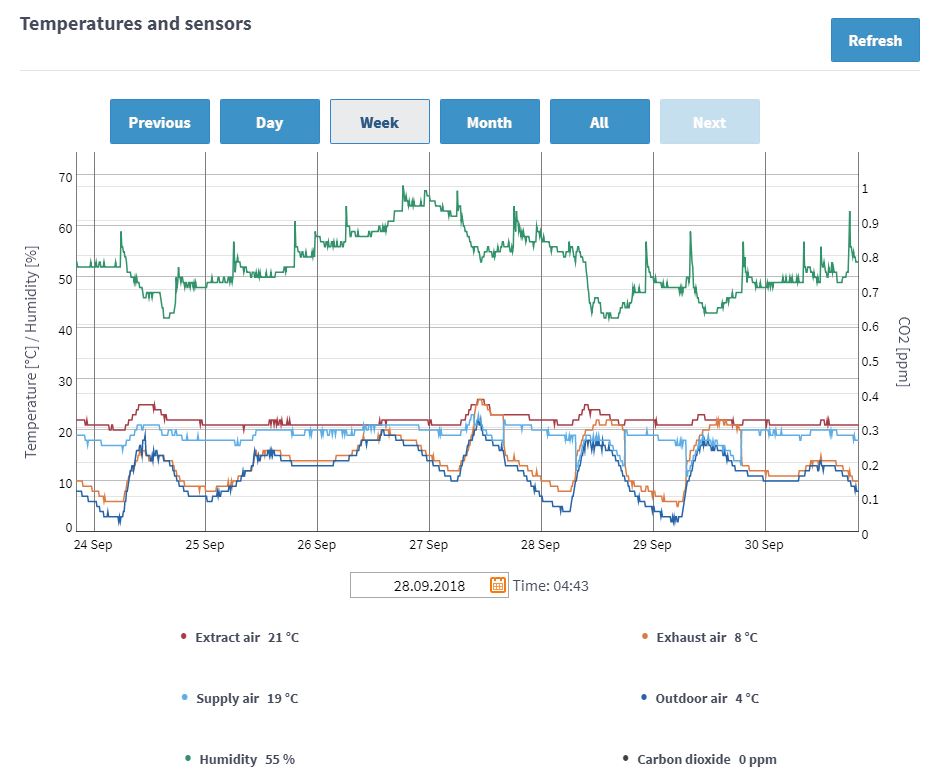
September 2018 performance.

HRV Software review and Control.
Example of HRV in use in our home.

Summer Bypass

The summer bypass function allows one to bypass the heat recovery function during warm weather or reduce winter sun peaks (when the sun is low on the horizon). The way this works is to bring the air outside directly through the ducts in order to reduce the internal temperature at night or during the day. One can see from the image above on the 28 and 29th of September I forced the HRV unit to summer bypass during the day to keep the temperate under control with the winter sun. No heating had been switched on for the month of September and the night temperature outside has hit the lowest in the same month of 2 degrees.

The Airflow unit is software controlled by means of your phone or your personal computer . This helps keep the HRV cost down, gives remote control and it provides data for analysis. The physical manual control panels in general cost €200 or more.

The post heater in the Airflow DV145 unit has a PWM (pulse width modulation) heating element control which means that it can control the switching of the heater within a fine tolerance for heating the air rather than just switching the heater On and Off.  The reason I installed this was really to provide a back up option to the main house heating system (approximately €200 extra).

House Heating System

The house heating is currently designed around two storage heaters of 1.7 kw each to heat the house using off peak electricity and operate for 7 hours a day. I picked up one unit for free and the other unit cost €70.  I suppose one could say that the total capital cost of the heating system was €270 when one adds the HRV post heater.

For the month of October one of these heaters was switched on for 14 days.  The post heater also improves the frost protection functionality within the HRV and helps maintain a heating level of 21 degrees Celsius throughout the house.

Below is an example of how the HRV switches on different heating loads in the post heater while maintaining a set temperature . The time interval below is over 60 seconds (full screen view) and the heater appears to adjust the power output required continuously to maintain the set temperature.

Post Heater HRV
Post Heater being switched on and off approximately six times in a minute with different heating outputs.

Duct work for primary supply and extract

I selected an insulated 210mm EPS duct for the extract pipe as this duct carries the coldest air from the HRV unit .

Supply and Connecting Manifold Ducts

There are a number of options. My understanding is that the larger duct systems such as 150mm feeding multiple rooms with silencers is the best option if one can accommodate this in the build early on and find a good designer. I opted for the 91mm semi rigid ducts using a manifold system from https://www.fraenkische.com and I am very happy with the low noise level and amount of air being delivered throughout the house. I use a co2 sensor to monitor how the flow rates are working in different rooms.

Hiding Ductwork

When one is designing a house to the passive house standard or installing an HRV unit in an energy efficient /airtight house one can reduce the cost on the system if one plans the service routes of the ducts early on and selects particular joist types. It is expensive to batten and counter batten to hide the ducts afterwards as one needs to try and keep the duct-work within the airtight envelope.

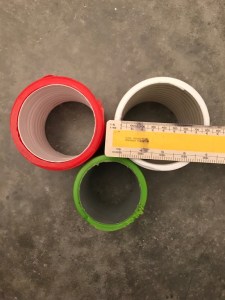
I opted for the manifold system using the largest semi rigid ducts I could find. These were the Fraenkische-profi-air classic pipe with an internal diameter of 78mm and outside diameter of 91mm. The larger the duct the lower the air friction and noise when delivering air to rooms such as bedrooms. These ducts are also anti-static and low emission.

Below are the choices I came across from the semi rigid range. The white duct is made by Fraenkische.

Connection ducts from Manifold to HRV.

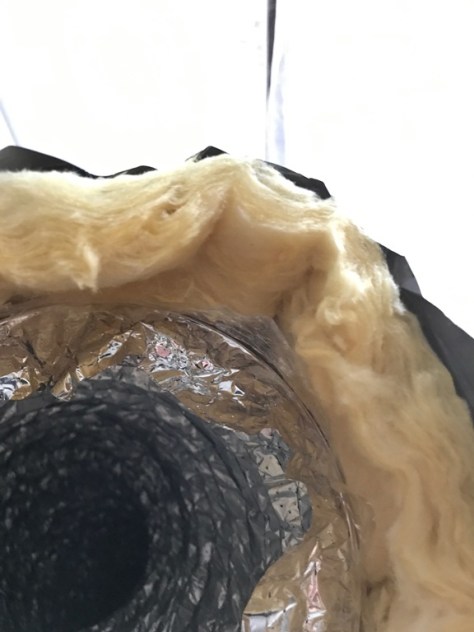
For the ducts that connect between the main HRV unit and the manifold I used an insulated flexible sound reducing duct (as seen below).  This is made up of an inner foil with sound reducing properties, next an airtight plastic membrane and then insulation followed by another layer of foil. The inner rim is re-enforced with a steel wire to provide rigidity.  It is time consuming connecting this up but it appears to have done its job.

HRV Duct
HRV ductwork

Contact Details:      seamus.sheehy.selfbuild@gmail.com

Heat Recovery Ventilation (HRV) Selection Part 2

Selection of the HRV unit.

For those building to the Passive House standard the HRV is independently tested by the Passive House Institute. They provide a full list of certified units at the following link Passive House Certified Heat Recovery Units.   

HRV Efficiency (How is it calculated)

There are principally three methods it seems. One is the Supply method (used by manufactures) and this usually gives a higher efficiency value than the real world values. The Extract efficiency method is used to give a closer to real world value and then the passive house efficiency method which adds the following formulae to the Extract efficiency method.

Pel = real electrical power, W
M = mass flow, kg/h
Cp = specific heat of the air, kJ/kgK

The good news is that it appears if the HRV is certified to the Passive House standard then the difference between the supply method and the extract method  is very small.

In the near future I plan to connect to the HRV unit I purchased and view the efficiency values.

The Passive House certificate shows the following

HRV
HRV Calculation


Cost Efficiency

The most cost efficient unit I came across was the Airflow DV145 passive house certified unit for our 200 m2 house with an airflow capacity of 542 m3/h. I paid around €2200 for it. If one has a smaller floor area then more savings can be made by using a smaller unit. As a self builder technical support was important and their main offices are in the UK.

If one opts for a non-certified HRV unit a 12% reduction must be applied to the manufacturers specification . Some manufacturers might not renew the certificate each year so it is a good idea to ask if a certificate exists. The data must be entered in the planning software for the passive house. For those interested in the passive house planning software (PHPP)  there are courses run in Ireland frequently so I would suggest that one does this 3 day course (typical) and usually one finds the software discounted on the course.

It is an enjoyable course where one can select your own pace (the first time I did the course I wanted to listen and learn rather than calculate the performance of our own home). One such place is http://www.passivehouseacademy.com/

HRV Self BuildTo be continued………


Contact Details:      seamus.sheehy.selfbuild@gmail.com

Heat Recovery Ventilation (HRV) Selection- Part 1

HRV OPTIONS

There are two types of HRV units that I came across -Heat (HRV) or Energy (ERV). The ERV is used principally for recovering humidity  and heat. I selected a HRV unit,

Size Matters

When selecting a HRV unit it appears that one of the biggest mistakes is to select a unit that is too small but still satisfies the current regulations. What appears to happen in the competitive world of quotations is that a unit that just ticks the box comes in as the best price.

In selecting a unit for our home I selected a unit that has a manufacturers capacity of 542m3/h where the floor area of our house is 205 m2. Currently the unit is running at 31% of its capacity and it is maintaining a CO2 (Carbon Dioxide) level of around 700 ppm when the four of us occupy it . I use a stand alone CO2 sensor to measure the CO2 in different rooms. (I have not commissioned the unit yet as the internal doors/glazing are not installed).  

Another advantage of selecting a larger unit is that it can run more efficiently at lower speeds and generates less noise through the ducts or from the unit itself.

Some of the options from the manufacturer Airflow (my unit is the third from the right).

HRV passive house
A choice from one particular manufacturer.

September 2018 performance (with no heating switched on yet).

The graph below gives an idea of how the HRV works when managing heat from the house and supplying fresh air. For the coldest days of the year so far (2 degrees at night-in September) I put the unit into summer bypass mode the next morning (take in outside air directly and pump it around the house) because the sun was shining that day. The winter sun is lower in the sky so solar gain increases in the winter (when the sun shines). The house is made of timber/glulam construction. The main thermal mass is the concrete floor at the moment soon to be covered by a 32 mm thick wooden floor so the response times of house I suspect will change. The floor and wall temperatures are approximately 22 degrees Celsius.

HRV Software review and Control.

Example above of HRV in use in our home.

Sample Data in our home using Google Fusion to visualise the HRV data for a week in October. (see link below)

  • One can select the chart tab and visualise the graph.
  • Use the bottom graph to zoom in.
  • The data is from the 21 October to the 28 October 2018.
  • One storage heater rated at 1.7kwh was used for 5.5 hours a day off peak.
  • The storage heater was switched off for one day on the 23rd October.
  • The graph starts at midnight on the 21 October.
  • Each ref reading is every 10 minutes.
  • The CO2 reading vary between 480ppm and 700ppm when fully occupied.

https://www.google.com/fusiontables/DataSource?docid=14U8eXcMzhritW7dQTPSuBEIYNhyDcayGJUlnuLyi

Filters

All HRV units contain a maintainable part called filters. They have a number of functions.

  • Clean the air being pumped into the house, and
  • Keep the internal components such as fans, ducts and HRV housing clean.

One typically finds one coarse filter and one fine filter on the air supply into the house and a coarse filter on the extract air from the house before the extract fan. The coarse filter is typically a G4 and the fine filter is a F7 (Pollen filter). I installed a 400mm x 400mm  G4 coarse filter at the duct inlet so that I could keep the main supply duct clean. It is a bit more effort to maintain this but it will hopefully minimise the maintenance of the duct.

To be continued………


Air tightness Test-Passive House 0.22ACH

Self Build air tightness test -0.22ach with a volume of 603 m3 @ 50 pascals. 

When one is building to a performance standard the day of reckoning is the airtight test. The reason for this is that when one is pumping fresh air into the house using a Heat Recovery System, rather than relying on simple multiple holes in the wall, it becomes important to control where the fresh air is coming from and where the heat is going.

Airtight Test
Airtight Test


If air is leaking in or out around windows /doors/walls or other gaps in the building fabric then heat is lost and moisture problems in the form of mould can arise or else give rise to damage to the building fabric.

The pressure 50 pascals equates to a 20 mile per hour wind which is not too untypical in Ireland. So if one opts for the Irish  building standard (a minimum standard) this equates to the air in the house changing/leaking 7 times a hour when a wind blows at 20 miles per hour. No wonder people block up the hole in the wall vents .

  • The current Irish building standard  require 7 air changes  per hour (ach) also called leakage at 50 pascals  typically with no heat recovery system As a guidance heat recovery manufactures recommend 3 Air leakages per hour to ensure that the heat recovery system can push fresh air into the house and recover heat leaving the house through its own system rather than through gaps in the building fabric.
  • The passive house standard for a new house requires 0.6 Air changes per hour (ach) at 50 pascals to ensure the heat recovery system works efficiently, ensure that occupants receive the correct amount of fresh air and minimise building fabric damage.

The passive house test differs from the Irish test because it must include pressurisation and depressurisation and use the volume as set out per Vn50 (EN13829).

The Test

Gavin O Shea from Greenbuild was hired for the job.  He is certified/audited by the National Standards Authority of Ireland (NSAI).

The preparation for this entailed sealing all cable ducts and the inlet and outlet pipes for the Heat Recovery System. One also ensures that the shower and sink outlet traps are full of water. The overflow outlet for two water tanks were not sealed off. I did consider a duck valve but it was not in place at the time of the test.

Air Tight Test
Airtight Test


The test using the Irish method gave a result of 0.181 m3
/(hr.m2).

Gavin O Shea calculated that the equivalent size hole that equates to a result of 0.22 ach is approximately 65.25 cm2 (@50Pa) or a hole 81mm x 81mm if all of the leaks present in the dwelling were concentrated into one hole. That is about a tenth of an A4 sheet of paper.

The results of the air tight test can also help determine the selection of the  Heat Recovery System. If the airtight test is lower then more options are available when selecting a unit.

From my research a passive house standard Heat Recovery Unit will cost more because it needs to be independently tested by the Passive House Institute using their test method. Heat Recovery manufactures have also the burden of putting the unit through national tests or international tests with the end result being the customer pays more.  One has also the option to select a non passive house certified unit for a passive house but when calculating the performance value one needs to account for this in the PHPP software with a 12% reduction below the manufacturers performance claim.

If one wants to view certified Heat Recovery Units one can find and sort them at the following link.  One can see for example at this link the capacity (Column- Air Flow Range) that these units have as it is important to select a unit that is oversized for your particular self build. I would compare it to selecting a mini car to tow a caravan up a hill compared to using a larger car. The small car will struggle from an efficiency and noise point of view while the larger car will be quieter and more efficient at the require flow rates.  I will do a separate post on how I selected our Heat Recovery Unit.


House Ventilation-Part 1

Controlling the Supply of Fresh Air

It is now time to research the solutions available in order to guarantee a fresh air supply into the house, extraction of the stale air and recover heat before the stale air is sent on its way.

There are a number of options -Use the hole in the wall in each room (with no heat recovery), use a central extract system (with no heat recovery), use decentralised heat recovery or a fully ducted heat recovery system .

From previous experience and research the hole in the wall system does not work well taking into account that we have a wind speed of almost twice that of Germany. The system creates draughts and one has only to view the number of vents blocked up and the dependence on the correct speed of wind blowing to supply fresh air in Irish dwellings to realise it does not work.

The central extraction systems  either using the stack effect (using temperature differences between the inside and outside) and   Bernoulli’s principle (using wind) with no fans is an option. One can use extraction systems that are powered by fans. These do work it appears but they need careful design .

Localised vents in different rooms that use heat recovery such as the Lunos , Aereco and Glidevale iMEV system offer powered heat recovery but when I priced these they were more or less the same price as a fully ducted system and require more holes than I want through the fabric of the building.

Another system recently certified by the Passive House Institute is a heat recovery system that requires two units at either end of a building called (fresh-r). I can see the system working in an open plan environment but the cost is more or less the same as the other solutions above.

If one wants to compare certified heat recovery systems one can use the certified component list on the passive house  web site Certified Heat Recovery Products.  These products are independently tested by the Passive House Institute.

I will be selecting a centralised heat recovery system because I feel if it is specified, designed , installed and commissioned correctly it offers the best solution. I also plan to use it as a clothes dryer in order to get extra value out of it.

What is in a typical centralised Heat Recovery System,

It typically has two energy efficient fans, a plastic heat exchanger, filters to clean the air, enclosed in an airtight box and a means to control the fan speed. It is a simple unit but the cost is high (in line with the price of other systems above except for the hole in the wall or a stack system)

How it works

Passipedia-basics types_of_ventilation

How much does it cost

I was informed recently that the Passive House Institute charges heat recovery manufactures around €60,000 for testing and certification and then there are ongoing yearly costs that need to be passed down to the consumer. A Heat Recovery Company also needs to pay for National test (separate to the Passive House Institute) in different countries which also needs to be passed down to the consumer. There appears to be no European standard test that can satisfy all EU countries.

The product I was originally interested in was from a company called Paul but for some reason the price has risen substantially- I received a price for a Paul 450 unit two years ago and it was €2000 . It is now nearly €3000 -why?. One reason is that that the product was taken over by another HRV supplier Zehnder. I will try not select these products as I see no reason why the price of the unit increased by nearly a €1000. The price above is for large air supply volumes. A three bedroom house may only need a small unit costing 50% less.

Alternative Choices

One of the highest energy efficient certified units available is from a company called Maico-an Irish representative is available. Prices start at around €2400 for a more efficient unit than the PAUL unit .  Other options are from Brink such as  the Excellent 400 plus also available in Ireland. Systemair Gmbh also have units available in Ireland.

Ducts

I did not think this area was going to be as complex as it is. Lets start-there are different choices of ducts from metal round, plastic round,  flexible round, rectangular and all other types of shapes. The bottom line is that large round metal ducts (150-200mm) are the most efficient and quietest and have the lowest air speed.

The flexible ducts vary between two types either Aluminum or Polyethlene with general sizes between 125mm (steel), 90mm, 75mm and 65mm. The smaller the duct equates to more losses- an increase in noise and possible draughts because of the higher air speed (careful placement and selection of the outlets in rooms to minimise these effects are important). I will be trying to select and use a 90mm semi-rigid duct (outside diameter) or larger steel duct. I want to avoid the use of the 75mm duct and all its permutations such as each room being supplied with two 75mm ducts in parallel.

Larger ducts need mufflers or silencers as room noise can travel between rooms . If one has an attic or one can find a way to install the 125mm steel duct with insulation in particular routes the larger ducts may be the best way to go.

Be aware that installing a false ceiling can double the cost of the HRV. I will review  all possible systems of ducts . If one uses steel I have been advised that one needs to insulate these as it can take a long time to heat up if the temperature drops leading to colder air being supplied for the initial start up.

The flexible ducts have multiple accessories to connect each part and extra cost is associated with this. The weaknesses of extra connections affects reliability. I will try and simplify the system of connections (somehow).

  • Ducts need to be cleaned (design and plan for this)
  • Keep the duct lengths short and straight to minimise losses.
  • Use large radius bends rather than 90 degree bends.
  • Consider placing ducts in the foundation when building new.
  • Some plastic ducts are antistatic (minimises dust collection on inside)
  • Some plastic ducts have antibacterial liners
  • Some plastic ducts are odourless and use physiologically and toxicologically safe polyethylene.
  • Some plastic ducts are smoother on the inside than others (minimises losses and reduces noise).

The non monetary factors for using a centralised Heat Recovery System that I can think of are:

 comfort (help to filter diesel particles , pollen, outside smog etc from the forced incoming air)

building protection and health/hygiene (remove high level of moisture from cooking, showers, baths, and people that could damage the fabric of the building, CO2 from persons in the house and VOC (chemicals from furniture, beds, floor carpets, paints, plastics etc) and supply enough oxygen to get a good nights sleep. Reduced noise because windows do not need to be left open and no holes exist  in the outer walls of bedrooms.

 security (can keep windows closed)

 thermal energy efficiency (recover up to 90% of the heat energy leaving the building)

The Plan

I want to see if I can design the HRV with the 150/125mm steel ducts or use the 90mm polyethylene outside diameter ducts with the antibacterial liner, antistatic liner and low emission polyethylene.

Each of the polyethylene ducts return to either a supply manifold or extract manifold (see example below).

Manifold_Junction
HRV Manifold

If I end up selecting the 150/125mm steel ducts these will use no manifold and the individual rooms are tapped into the main duct.

Extra Functionality Planned For the HRV

In order to get the most value from the centralised Heat Recovery Unit I plan to make a special cabinet to dry clothes using a feed and return air supply. I will add a heater to the cabinet to give the clothes a drying boost where necessary.

Calculators

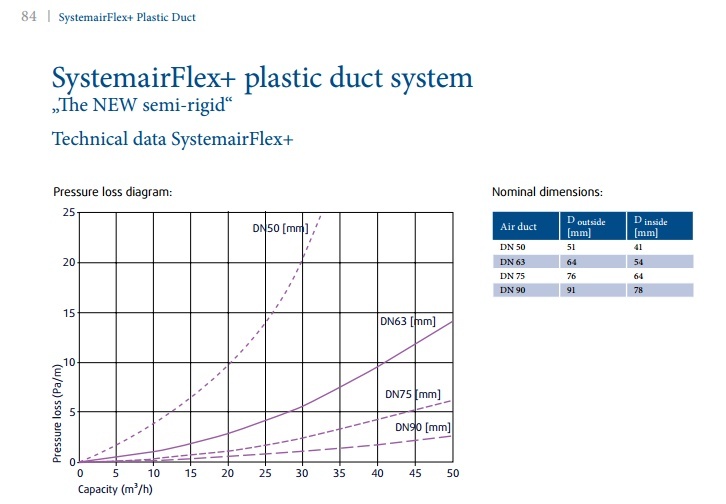
An interesting calculator I found is one that calculates the losses of ductwork and air speed. One can experiment using rectangular versus round ductwork and the inner roughness of the ductwork here.  One can see the air speed change as one reduces the size of the ducts. There are another few options on the right hand side menu to calculate other factors.

Example of Duct Losses

HRV Duct
Flexi Duct

Background Research and Notes

  • MVHR are not a fit-and-forget systems
  • Based on European CEN Standard 13779 ventilation for ‘medium’ air quality should be at least 10 L/s per occupant (15 L/s for high indoor air quality).-non residential
  • Ventilation rate of 8 l/s (30m3/h approximately) per person identified in CIBSE Guide A8
  • In order to achieve an air exchange of about 0.33 ach (air change per hour), one would have to open the windows wide for 5 to 10 minutes every three hours – even at night! –Source
  • Biggest complaints -noise  and draughts (over dining area, bedroom areas etc) causing users to switch the HRV off.
  • Balance the air going in against going out-not practical to reach 0%. Aim for less than 10%-allowable imbalance between intake and exhaust air flow for these systems is 10%
  • Filters not changed can increase (double) the cost to run because the fans use more electric power to send air around.
  • Ensure that the HRV is accessible in order to change the filters.
  • A good strategy for the summer appears to be to reduce HRV speed/flow rate and open windows.
  • Total cost of HRV if left on appears to be around €60 for electricity and €60 for filters (Once a year). Check cost of replacement filters for own unit.
  • Ducts need to be cleaned every few years so the design needs to make it accessible.
  • A larger HRV unit than required can be more silent because it does not have to work near its full ventilation capacity.
  • A measured air noise level of less than< 24db for bedrooms (Finnish Guideline) . Can it be specified and delivered?
  • Noise levels up to 30 dB(A) were described as “too noisy” by more than 40 % of respondents. The standard for certified PassivHaus dwellings [13] is a limit of 25 dB(A) in both living rooms and bedrooms. Source
  • Maintaining indoor humidity below 7g/kg should help to reduce the risk of excess mite growth.
  • Note that air speeds greater than about 0.3 m·s–1 are probably unacceptable except in naturally ventilated buildings in summer when higher air speeds may be desirable for their cooling effect.CIBSE Guide A8
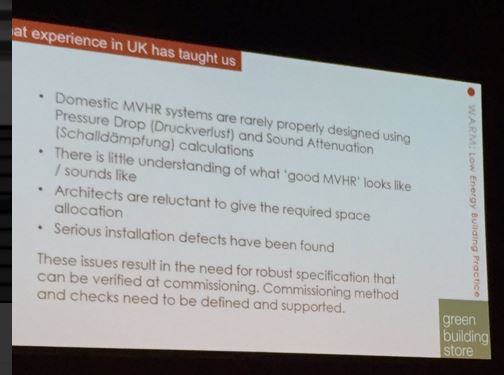
  • Significant problems were found with the commissioning of HRV systems, with only 16% of systems being found to have been commissioned correctly with respect to air flow and balancing. Source
  • 44% of kitchens meeting the minimum requirement of 13 litres per second.Source
  • Measured air flow in 88% of systems utilising rigid ducting were equal to or greater than their design air flow values, whereas between only 40 and 44% of systems utilising flexible ducting met their respective design value. Source
  • Any leakage through the dwelling envelope will have an impact on the efficiency of the heat recovery component. Source
  • Lack of appropriate airtightness, lack of complete commissioning, poor air flow and extract rates (and associated lack of compliance with regulatory standards), lack of balance and inappropriate duct types. Source
  • Wolfgang Feist‏@WolfgangFeist-You don’t believe this?The “trick” is:We have a F8 fine filter at the external air (“fresh air”) inlet, therefore supply air is very clean

In another technical paper the following was noted as the cause of excessive noise. The source of the document is here

Extract from document shown below

“The following list of issues are all taken from actual findings on investigations that have been reported. Issues that can lead to excessive noise for occupants are noted under the following headings of design, installation, commissioning and maintenance.

Design issues

• Centralised MEV or MVHR unit located in inappropriate place for break out or structure borne noise, e.g. bedroom cupboard or on rafters in loft above a bedroom.

• Poor ductwork layout – too many bends can lead to additional fan pressure requirement and regenerated noise

• Specification of flexible ductwork

• Inadequate attenuation of duct borne noise

• Installation issues

• Ductwork kinked or damaged inhibiting flow

• Ducts not connected up to supply or extract valves (which will inhibit flow and require higher fan setting)

Wrong type of outlet fitted (using extract outlets for supply air can lead to regenerated noise)

• No anti-vibration mounts used

• Failure to ensure ductwork is clean when installed prior to commissioning

• Use of flexible ductwork where not specified”

Recent Research

I note the above is summarised at the recent passive house conference (see below).

HRV

Moisture Control, Supply of Fresh Air, Removal of VOCs.

The Past

Having lived in an house that had single glazing and was draughty, I only realised how inefficient the ventilation was when I purchased a Carbon Dioxide meter (CO2) for the old house. This meter measures the amount of carbon dioxide in a room (as we all exhale CO2). The bottom line is that a level below 1000ppm (part per million) is taken as a healthy starting point. Another factor that is not healthy is Volatile Organic Compounds (VOCs) these are the chemicals, gases given off by furniture, paints, floor coverings, household cleaning agents etc. When one reads the possible health effects from VOCs it becomes clear that one needs to reduce these. See for example http://www.epa.gov/iaq/voc.html

In our last home what was amazing was how little oxygen we were getting especially when asleep (and in turn high VOCs). Within an half an hour the meter would alarm that the levels of oxygen (fresh air) were low.

What I used to do in the old house is determine if there was a wind blowing or a storm due. This then entailed adjusting the window opening to a minimum in order to ensure that we would get some level of oxygen. If there was no wind blowing outside then I would open the window  to approximately 75 mm (The horizontal window was over a meter and a half long) and leave the bedroom door open for some cross ventilation through the house.

I think it is now widely accepted that holes in the wall or opening windows does not work for fresh air and a healthy environment. The only way that appears to work is to blow fresh air in / suck stale air out.

CO2 Meters

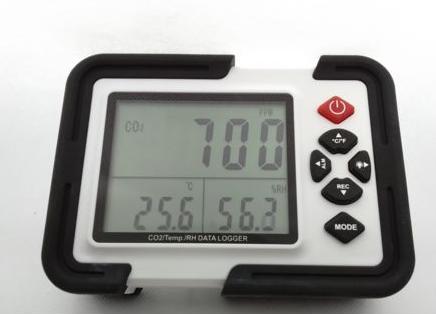
CO2 meters for some reason are expensive. The unit I purchased was over €300 a few years ago. I came across a more affordable unit recently on ebay for approximately €100 (allow for customs and excise) that also has a data logger (records the information over time). I feel it is well worth investing in one of these as the true quality of air in a house can only be believed when the CO2 levels are measured.

One seller on ebay was perfectprimetechnology . If one types in the word co2 at their store it should be easy to find or in any other store. 

CO2 Meter
Carbon Dioxide CO2 Meter

While there is no direct link between VOCs and CO2 I have read that if one is breathing air in a room with high CO2 levels it gives  a good indication that the VOC levels are also high.

Going Forward

In the new house we plan to use controlled ventilation which will supply fresh air and in turn recover some of the heat blown out of the house .  It is a mechanical system called a Heat Recovery Ventilation Unit (HRV). I do not know why they don’t call it a fresh air unit as this factor has to be more important than recovering heat. In order for this fresh air supply system to work one has to control all drafts in the house as one does not want to be drawing air in around windows and doors and hope that the fresh air ends up in the correct room. This can only be achieved by eliminating drafts by sealing the building in an air tight membrane/system and blowing fresh air in and extracting stale air out using two ducts.

In order to carry out airtightness in a home one appears to have a few options -On a block house this is achieved by internal plastering (and some preparatory work) or for a wooden frame house one can use a membrane or take a chance on using OSB (Oriented Strand Board). Even a block house will still need air tight membranes on some structural details.

Another reason for using this special air tight system is to control moisture generated in the house from showers, cooking, drying clothes etc. This moisture can have a detrimental effect on the building fabric and reduce the insulation levels and in a worse case scenario lead to mould growth.  I feel the mould issue is going to be a health issue for generations to come where insulation is added ad hoc to dwellings without a proper design using building physics. I am not aware of any building physicists in Ireland guiding the construction industry. A worrying trend I am hearing of is cases where the consumer believed that adding insulation was a good thing not expecting the creation of mould and health issues for themselves.

The Airtight Target for a Passive house

In order to control the ventilation and heat loss the passive house standard requires less than 0.6 air changes per hour at their test pressure. The best analogy I could find for this figure was at the passivhaus.org.uk web site. One must achieve no holes or less than one 18 mm hole for every 5 m2 of the building envelope. 

Passive Haus
Airtight Standard Passive House

Practical Experience of the first steps in airtightness

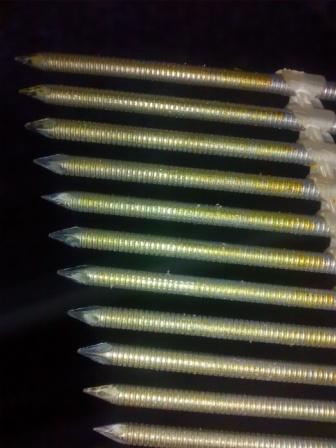
As I was installing counter battens on the ceiling in front of the airtight membrane I know from experience I missed the rafters in 3 locations in the roof. I am using serrated nails with a nail air gun. Once these nails are fired they are almost impossible to remove.

Nails
Serrated Nails

The strategy is not to try and remove them as this would leave a hole other than a nail in a hole behind the batten.

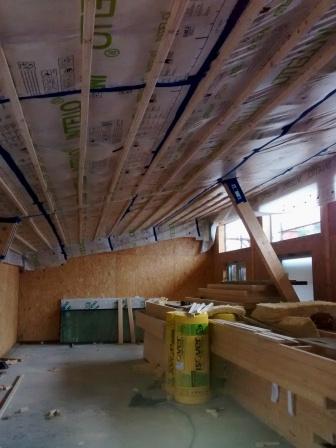
Battens on Ceiling

Installing battens on the ceiling

Another factor is to ensure that the insulation does not sag below the rafters before the airtight membrane is installed.

When one is laying out the membrane one needs to work in a triangle when stapling. For example staple 3 metres  or more forward on one side and then find the centre of the other side and staple from this point to either side.  Ensure that stainless steel staples are used as there is very little in the price difference.