All posts by Seamus Sheehy

Self Builder Passive House

Current Performance (without air tightness and full insulation)

Temperature Recordings

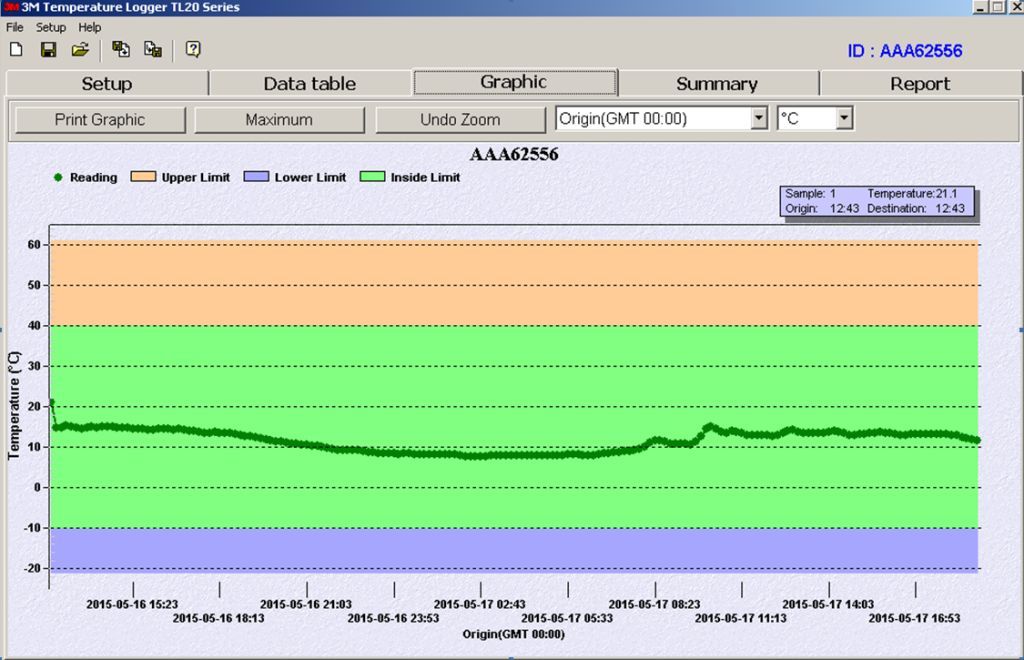
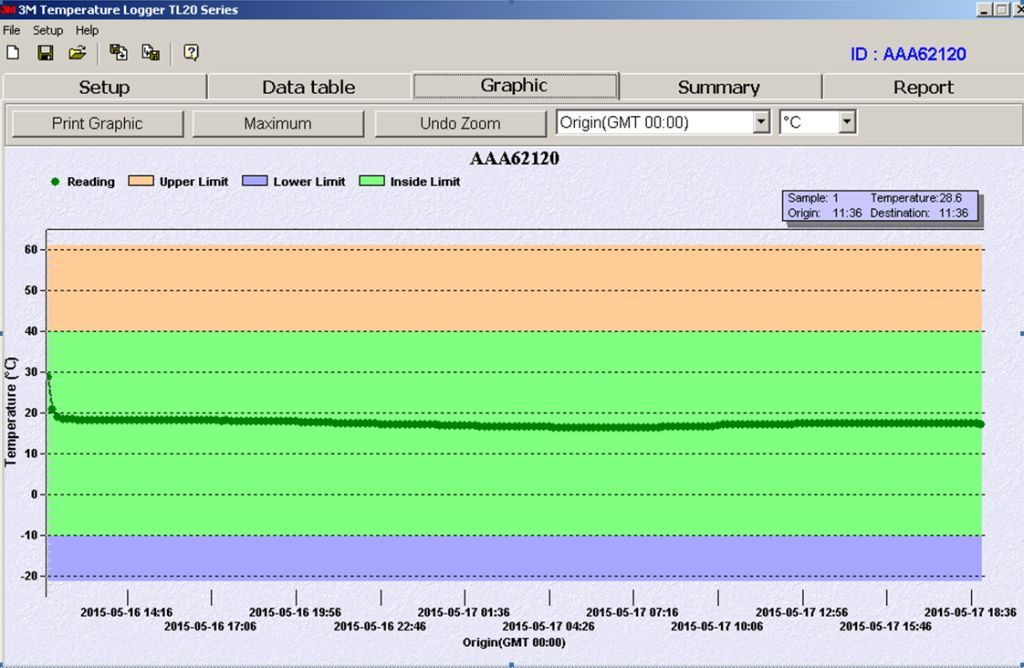
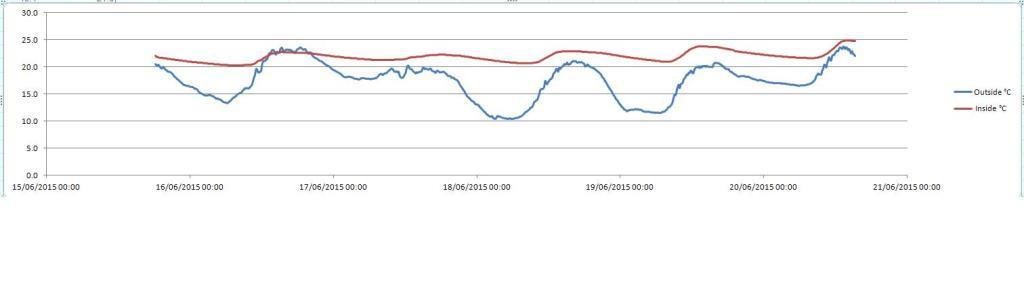
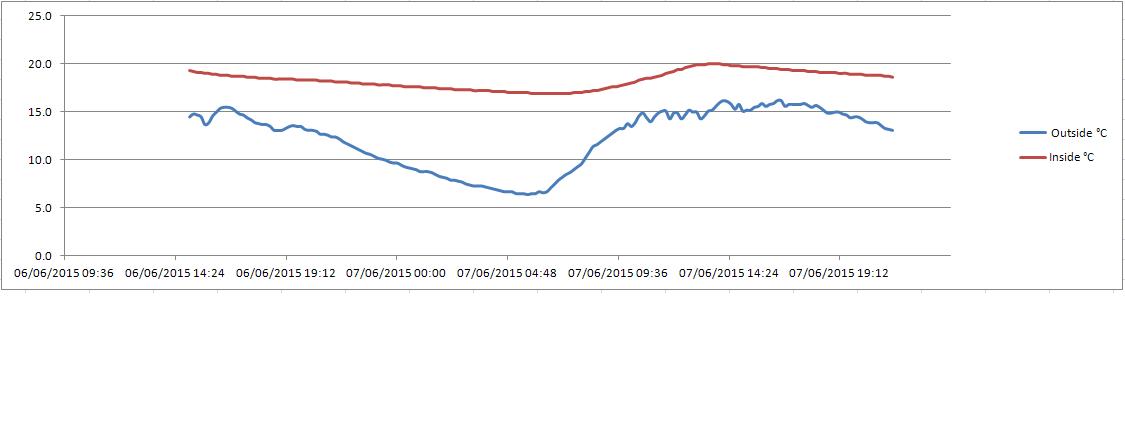
I decided to record the temperature inside and outside in order to get a feel for how the house performs before it is finished.

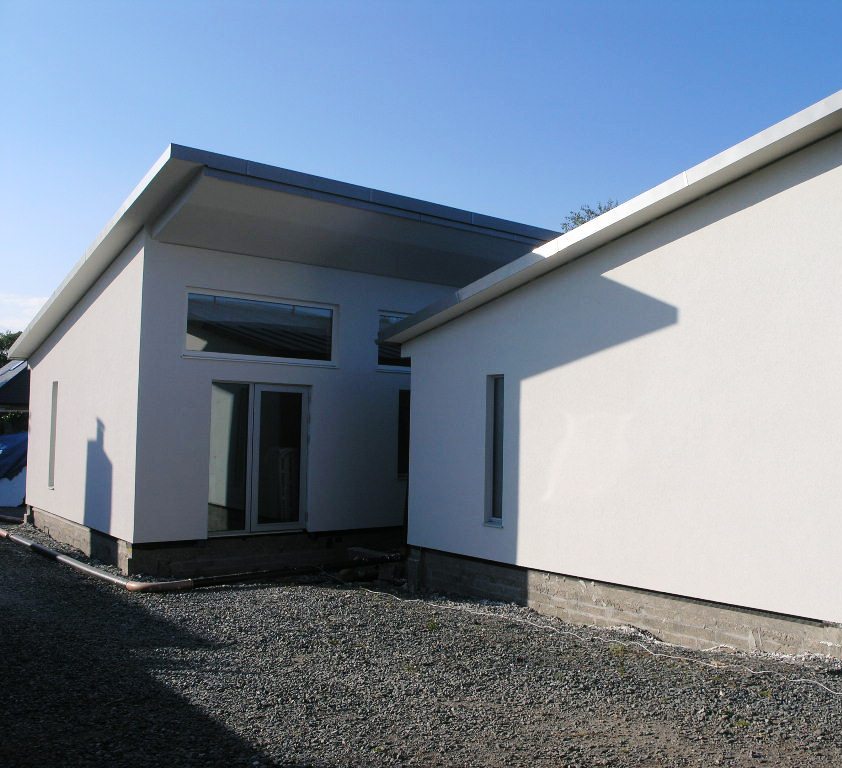
The current state of the self build is  :

  • Two ceilings have an airtight membrane and one of the walls has a membrane (both are incomplete)
  • I still need to install another 50 mm of insulation on most of the internal walls (2 of the 8 walls have the 50 mm insulation.
  • Two windows are not sealed and all have no airtight membranes attached.
  • The lower windows are shaded by scaffolding (minimum solar gain at the moment)
  • The HRV inlet and outlet ducts are loosely taped over
  • The floor is concrete
  • The wall and glue-lam beam wood moisture level is 13.5%
  • There is no heating system
Passive House Temperature
Outside Temperature
Passive House Data Inside
Inside Temperature

I collected data over a similar time period to the above and the results were similar.

The Old Plan and the New Plan

The plan was to install another 100 mm of insulation on the internal walls but I have now decided to not do this based on the results above and adjustment of the PHPP (passive house planning package) software. I feel I have left enough of a safety margin in the PHPP to still attain the passive house standard. For example I left the ground level door and window installation thermal bridge psi values at the PHPP default .

Installing the extra insulation would cost €1500 and the wooden frame to hold it in place would have added another €2000 approximately (Savings €3500) . I also reviewed the ceiling voids as I had planned to allow a 100 mm service cavity for the HRV ductwork. This was on reflection going to cost an extra €3500 approximately but now I will be able to hide the ducts using a simpler localised approach (Saved another €3500). It is nice to be in a position to review the costs at the pace of our self build.

Data Logging and Monitoring

I am now researching an economical building performance monitoring and control system that will record and display data over a longer period of time and allow me to control certain functions such as entrance gates, lighting etc .  I have read that the actual performance of houses being built whether passive or standard do not always perform the way they were supposed to.

I feel the only way to monitor this is to have an economical simple system (easy to use ) that watches for failures and highlights issues during the life of the build.  When one reduces the energy levels to a very low level finding problems before they increase cost is a must. For example on a recent school project the storage heating contactor went faulty in the closed position which meant the storage heating was on day and night. One had to wait for the next ESB bill to find there was a problem. 

The items I want to record are:

  • temperature
  • humidity
  • AC current
  • CO2
  • Solar DC PV output
  • Solar Hot Water inputs and Outputs
  • Relay Outputs

I note that the american PHIUS (passive house breakaway group) which is the equivalent of the passive house institute in Germany have co-developed a building Monitoring solution starting at $800 with powerwisesystems.com . I feel this is still too expensive. Lets see what my research turns up.

More Temperature Data (Update)

Inside and Outside Temperature with scaffolding taken down and all doors and windows closed-Image Below

Temperature Performance Passive House

Inside and Outside Temperature with scaffolding still in place-Image Below.

Passive House Temperatures


Wall Battens, Air Tightness, Service cavity and Plasterboard

Wall Battens

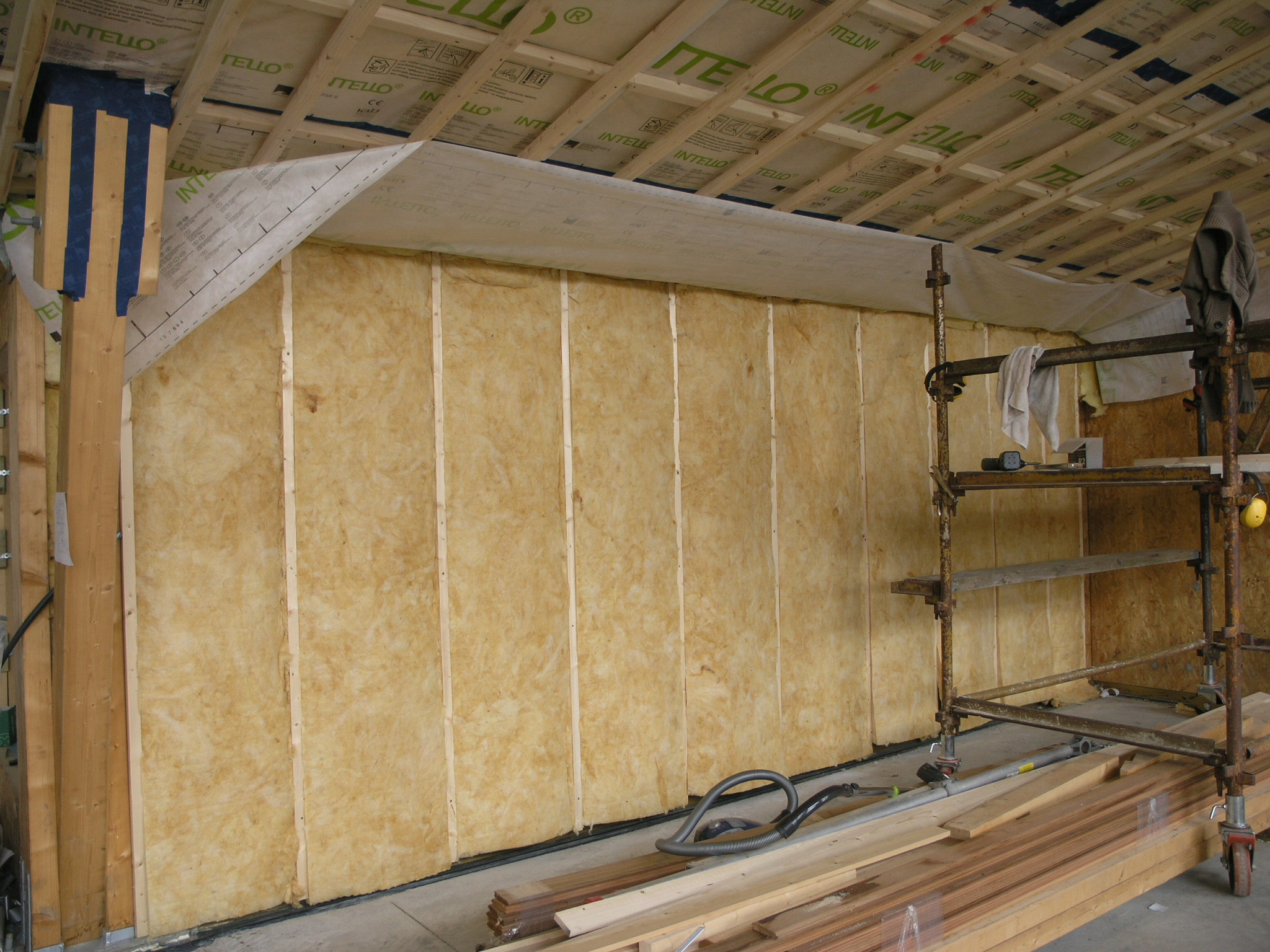
I have started preparing the internal walls for more insulation, air-tightness and the service cavity .

Isover Metac Insulation
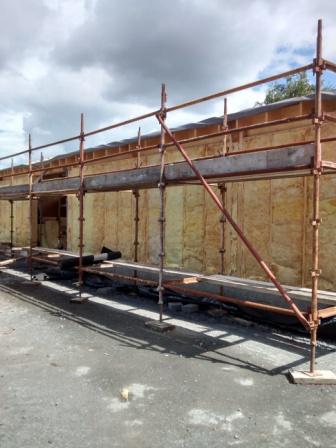
First Wall with 50MM Metac insulation between vertical battens

There appear to be no hard and fast rules on mounting the battens and counter battens . Below are the Gyproc guidlines:

“Horizontal application of plasterboard on walls is generally
   recommended because it:
• Reduces joints by up to 25%.
• Provides a stronger wall.
• Reduces the possibility of unacceptable light reflections
around joints.
• Joints are at a more convenient height for finishing.

However, the orientation should be chosen so that – any
critical light falls along the recessed joints; the number of butt joints is minimised; a single sheet may be fixed vertically where it covers the whole wall. Nogging is not required behind recessed edge joints in horizontal applications. Partitioning fixed to steel framing in commercial applications is typically sheeted vertically. The lower edge of wall sheets is to be kept a minimum 6mm above the finished floor level. Ceiling sheets are to be installed with the long edge at right angles to the direction of the joists/main support members.”

The important factor is batten spacing . A good spacing it apears is 400mm for the plaster board. I am installing the first row of battens vertically at 600 centres. These will carry the next row of battens for the plaster board at 400 centres. I am placing the final row of battens horizontally in order to facilitate wiring and services. Fixing the plasterboard with screws appears to be better than using nails (Nº6 Type ‘W’ for timber framing a different screw type is required for other systems.)

Passive House Wall Build up
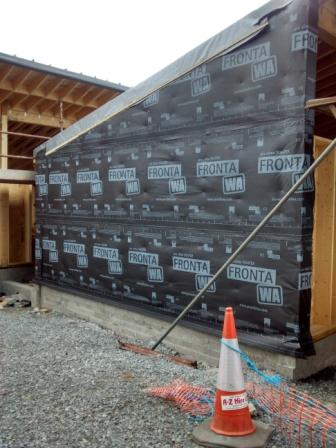
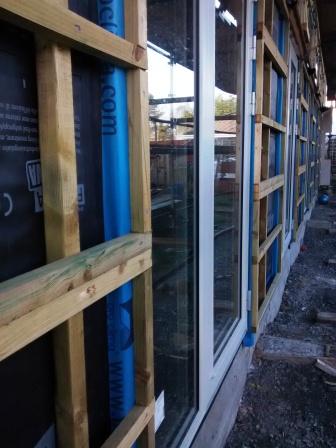
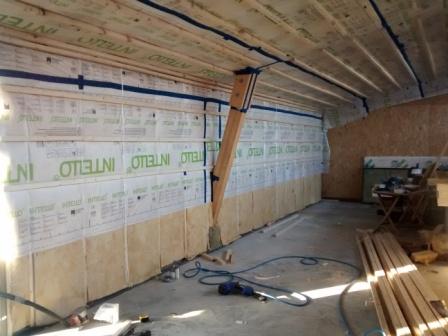
Wall Membrane and Airtight Layer with Battens

I used screws and serrated nails on the vertical battens. This layer of vertical battens will hold the 50mm metac insulation (see above and below). Next will be the airtight membrane followed by the horizontal battens. I will be placing 15 mm plaster board on the inside walls and ceiling and I am considering some other suitable board like a magnesium board (Mgo).

All the north facing walls will have cupboards/wardrobes placed in front of them. It allows me to practise knowing that they will not be seen again. I am also considering mounting the plaster board vertically on these walls as it will take one sheet exactly (2.4metre high).

Thermal Bridging at Sole Plate

Rockwool at Floor Level to minimise thermal bridging

Service Cavity

A small length of the lower floor section in the kitchen will have a service route specifically for pipes and wiring behind the skirting board. (I want some way of accessing these in the future without taking the wall apart .)

Insulation at floor level

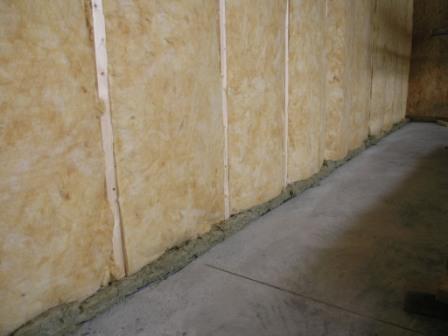
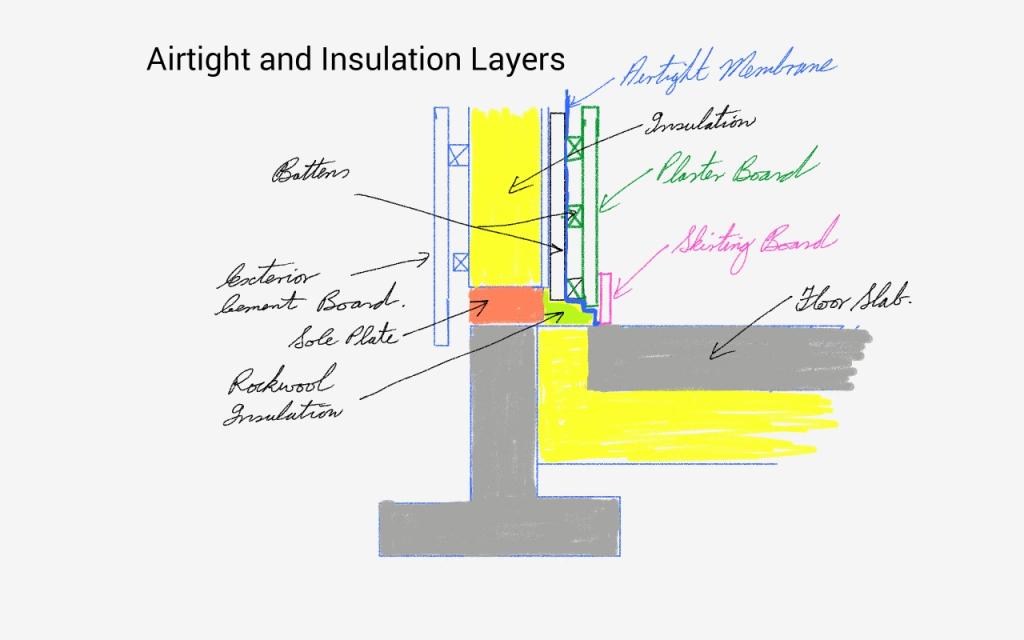
At the floor level where the sole plate sits on the structural ring beam I am placing rockwool in order to reduce the heat loss (thermal bridge). It appears that rockwool has superior fire resistance-I must do a test this week and see for myself.

Passive House WallWall Layers with Insulation

Above is a sketch of the wall build showing the basic components. For passive house certification I need to calculate the thermal bridge losses (linear heat loss) at this floor/wall junction. If I did not apply the rockwool insulation I would have significant heat losses and possibly condensation issues. I will calculate the thermal bridge losses using the free Therm software. It will show the real performance heat losses and condensation risks if any.

Moisture Control, Supply of Fresh Air, Removal of VOCs.

The Past

Having lived in an house that had single glazing and was draughty, I only realised how inefficient the ventilation was when I purchased a Carbon Dioxide meter (CO2) for the old house. This meter measures the amount of carbon dioxide in a room (as we all exhale CO2). The bottom line is that a level below 1000ppm (part per million) is taken as a healthy starting point. Another factor that is not healthy is Volatile Organic Compounds (VOCs) these are the chemicals, gases given off by furniture, paints, floor coverings, household cleaning agents etc. When one reads the possible health effects from VOCs it becomes clear that one needs to reduce these. See for example http://www.epa.gov/iaq/voc.html

In our last home what was amazing was how little oxygen we were getting especially when asleep (and in turn high VOCs). Within an half an hour the meter would alarm that the levels of oxygen (fresh air) were low.

What I used to do in the old house is determine if there was a wind blowing or a storm due. This then entailed adjusting the window opening to a minimum in order to ensure that we would get some level of oxygen. If there was no wind blowing outside then I would open the window  to approximately 75 mm (The horizontal window was over a meter and a half long) and leave the bedroom door open for some cross ventilation through the house.

I think it is now widely accepted that holes in the wall or opening windows does not work for fresh air and a healthy environment. The only way that appears to work is to blow fresh air in / suck stale air out.

CO2 Meters

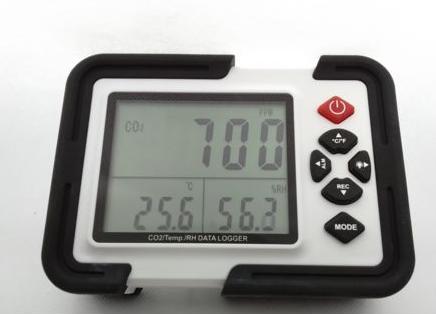
CO2 meters for some reason are expensive. The unit I purchased was over €300 a few years ago. I came across a more affordable unit recently on ebay for approximately €100 (allow for customs and excise) that also has a data logger (records the information over time). I feel it is well worth investing in one of these as the true quality of air in a house can only be believed when the CO2 levels are measured.

One seller on ebay was perfectprimetechnology . If one types in the word co2 at their store it should be easy to find or in any other store. 

CO2 Meter
Carbon Dioxide CO2 Meter

While there is no direct link between VOCs and CO2 I have read that if one is breathing air in a room with high CO2 levels it gives  a good indication that the VOC levels are also high.

Going Forward

In the new house we plan to use controlled ventilation which will supply fresh air and in turn recover some of the heat blown out of the house .  It is a mechanical system called a Heat Recovery Ventilation Unit (HRV). I do not know why they don’t call it a fresh air unit as this factor has to be more important than recovering heat. In order for this fresh air supply system to work one has to control all drafts in the house as one does not want to be drawing air in around windows and doors and hope that the fresh air ends up in the correct room. This can only be achieved by eliminating drafts by sealing the building in an air tight membrane/system and blowing fresh air in and extracting stale air out using two ducts.

In order to carry out airtightness in a home one appears to have a few options -On a block house this is achieved by internal plastering (and some preparatory work) or for a wooden frame house one can use a membrane or take a chance on using OSB (Oriented Strand Board). Even a block house will still need air tight membranes on some structural details.

Another reason for using this special air tight system is to control moisture generated in the house from showers, cooking, drying clothes etc. This moisture can have a detrimental effect on the building fabric and reduce the insulation levels and in a worse case scenario lead to mould growth.  I feel the mould issue is going to be a health issue for generations to come where insulation is added ad hoc to dwellings without a proper design using building physics. I am not aware of any building physicists in Ireland guiding the construction industry. A worrying trend I am hearing of is cases where the consumer believed that adding insulation was a good thing not expecting the creation of mould and health issues for themselves.

The Airtight Target for a Passive house

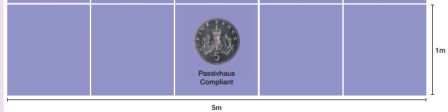
In order to control the ventilation and heat loss the passive house standard requires less than 0.6 air changes per hour at their test pressure. The best analogy I could find for this figure was at the passivhaus.org.uk web site. One must achieve no holes or less than one 18 mm hole for every 5 m2 of the building envelope. 

Passive Haus
Airtight Standard Passive House

Practical Experience of the first steps in airtightness

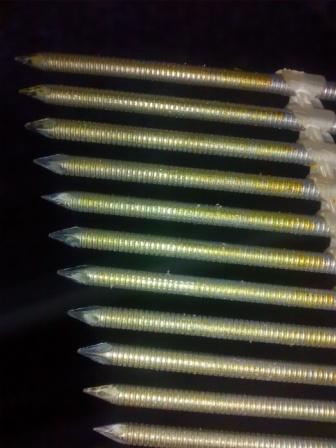
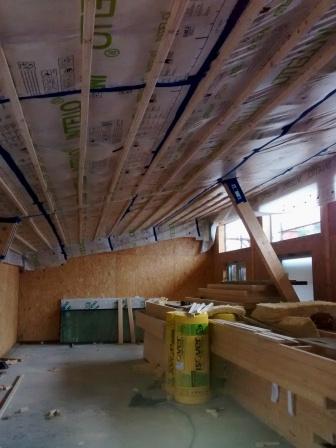
As I was installing counter battens on the ceiling in front of the airtight membrane I know from experience I missed the rafters in 3 locations in the roof. I am using serrated nails with a nail air gun. Once these nails are fired they are almost impossible to remove.

Nails
Serrated Nails

The strategy is not to try and remove them as this would leave a hole other than a nail in a hole behind the batten.

Battens on Ceiling

Installing battens on the ceiling

Another factor is to ensure that the insulation does not sag below the rafters before the airtight membrane is installed.

When one is laying out the membrane one needs to work in a triangle when stapling. For example staple 3 metres  or more forward on one side and then find the centre of the other side and staple from this point to either side.  Ensure that stainless steel staples are used as there is very little in the price difference.

Roof

 Roof Build Up

The pitch of both roofs is 12.5 degrees. The architect choose this in order to optimise the solar gain during the winter months and ensure both buildings receive adequate light.

There is a roof overhang of 1.8 metres in order to control the solar gain during the summer. (See below)

Passive house roof overhang for summer shading.jpeg
Passive House Summer Shading

The build up of the roof from the inside is : Plaster Board, 40-100mm service cavity, airtight layer, 400mm metac isover semi rigid 0.34 k insulation,  bitumen impregnated wood fibre board, membrane, ventilated cavity, OSB, DELTA®-TRELA membrane and then zinc.

Passive House Roof
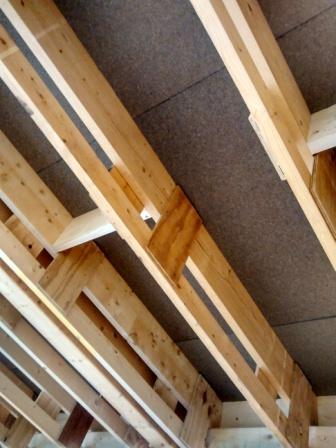
Internal Roof Build Up using Wood Fibre Board

We thermally broke the rafters where possible see above.

Self Build Passive House Zinc
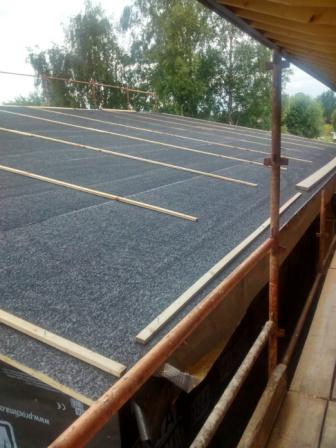
Delta Trela is the base material for the Zinc

Planning Permission Factors

In our planning permission reference was made to standing seam. This restricted the options for controlling costs later on. (A lesson for others). As it turned out for our design there were no variations in the roof  (ie no openings, different pitches, etc and this kept the costs under control. )

Design Factors

If one is designing from scratch note that tiles/slate options start with a minimum pitch of approximately 12.5 degrees (example: the melodie single pantile). During the design stage if one can simplify the design of the roof by minimising openings for roof lights, ventilation flues and any architectural details this will keep the costs under control.

An early idea I explored was to use amorphous solar electric panels (PV) built into the roof -I was unable to come up with a solution in the time frame and deal with the potential risks such as Fire/Insurance/Waterproofing and Hygrothermal issues of an intergrated roof solution. I will revisit this idea in the future.

When one selects low pitch roofs the options I am aware of are a green roof, EPDM (ethylene propylene diene terpolymer), and metal roofs. I considered the green roof but the hydrothermal analysis using Wufi software necessitated a different build up of the roof layers and the other reason was the need to apply for a change in our granted planning application.

Zinc can be placed on spaced untreated wooden battens without a membrane – a cost saving is possible  using this technique.
All fixings nails and screws are either grade 2 or 4 stainless steel.

New Roof Products

In the last month I came across a promising roof and wall facade system that acts as a solar hot water panel and it uses the drainback system (see previous blog on drainback system). The company is called http://www.aventa.no . As previously discussed it is too late for me to plan for this . What needs to be clarified is the cost of storage and panels .

Some test are being carried out on passive houses at http://www.aventa.no/eng/References/Row-houses-at-Mortensrud-Norway .

Quotations 

When one is getting a quote from any zinc installer ensure you specify the same product. I found that the Zintek  (be careful there is another name that sounds similar called Zintec but it is not zinc) was cheaper than Rheinzinc and the installers usually know which zinc is good.  Ask for their opinion (as they are working with the material). Think whether you can use non patinated (natural) zinc in some places as it is roughly a €1 cheaper per kg. The non patinated zinc eventually returns I believe to the same colour as the patinated zinc. We were advised not to use non patinated zinc in areas where different weathering could occur. So for all the fascias/sofit and edging details visible we used patinated zinc. As zinc is a traded commodity on the stock market prices vary.

Passive House Roof
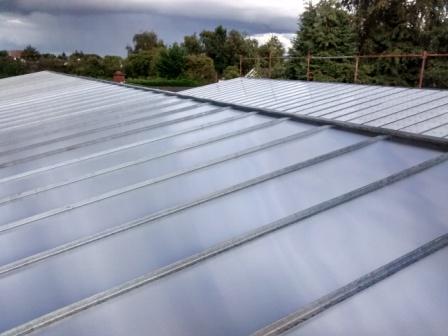
Non Patinated Zinc before weathering

Zinc Installation

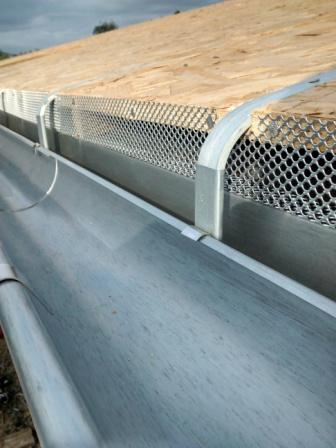
The zinc detail for the gutter were as follows. A ventilation/insect grille can be seen below.

Passive House Roof/Gutter Detail
Roof Gutter Detail

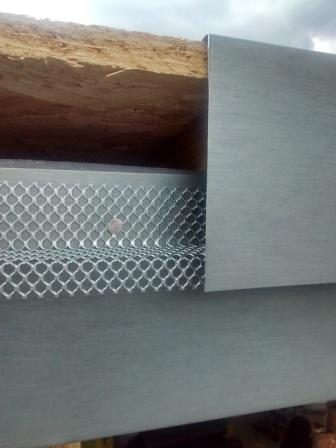
The ventilation/Insect grille on the overhang is as shown below. A detail to satisfy the engineer and the zinc installer was agreed as proper ventilation and air flow was required for the roof.

Self Build Passive House

Roof Overhang Zinc Detail Passive House

 Lightning Protection

I must do more research on this as little appears to be available..


Solar Hot Water

Part 1 

The Choice

There are two basic types of solar hot water systems that collect heat from the sun to heat water. One is called a Drainback System and the other is called a Pressurised System.

I have decided to use the drainback system because :

  • it has the least amount of components
  • it is easy to maintain,
  • it does not suffer from stagnation issues
  • it has a longer life cycle
  • it has a higher efficiency
  • it is simplistic in design

The disadvantage is that it is not typical in Ireland and it requires correct installation.

The Drainback System

Drainback System
Drainback Solar Hot Water Principle

There are commercial and domestic drainback systems. The system I intend to use is a domestic unvented drainback system.

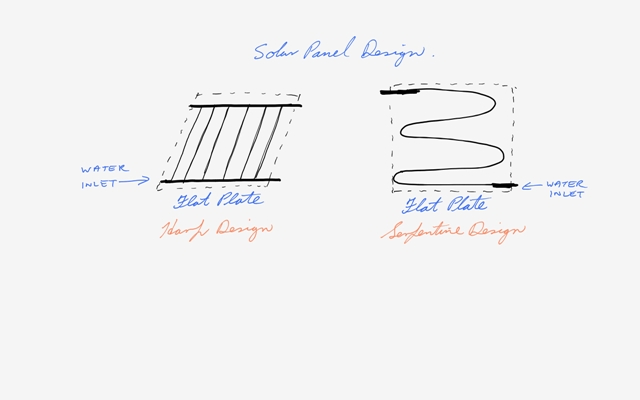
The choice of solar panel is important-the drainback system requires a flat-plate solar collector panel using risers (vertical pipes in the layout of a harp design-see sketch below) of around 12 mm (this might be a challenge to source).

Water (pure or non-hardened) with no glycol is used. Water is a better conductor of heat thus the efficiency is better (we need all the help we can get in the Irish climate).

Vacuum tubes are typically not available for use with the drainback system. My view on vacuum tubes is that they are equivalent to light bulbs on your roof (they use the vacuum principle like light bulbs which means they can fail). So from a cost point of view and maintenance point of view they are not being considered.

 Flat-Plate Panel Designs

Flat Plate Collector
Flat-Plate Panel Designs

Insulation
Insulation
As the building is a wooden frame structure the choice of insulation was limited. Cellulose ( K value around 0.039 W/mK ) was the preferred option but I opted for Isover Metac semi rigid insulation with a K value of 0.034 W/mK in order to keep the wall thickness to a minimum (currently 430 mm including a service cavity giving a U value of 0.09 W/(m²K) and to be able to do some of the work myself.
The roof U value is 0.102 W/(m²K) and the thickness is 530 mm  with 400 mm of Metac. Other insulating options were wood fibre board, sheep’s wool but the cost of theses was prohibitive in our build. A good explanation of these technical values can be found at the Rockwool Basic Theory link Insulation terms.
When insulating the wall structures (whether it is block-work, straw, hemp,wood etc) one is always trying to work out what could go wrong if some part of the building fabric failed and how would it correct itself if it goes wrong. A wall structure that is capable of drying out in the Irish Climate is the goal. What might work in Germany or another country may not work in Ireland.

In our build I considered using block work outside the wooden frame because of the lower cost. It turned out after a Hygrothermal analysis with Wufi that there was a greater potential for the wall not to dry out over certain seasons because of the amount of insulation in the walls limiting the thermal buoyancy that primarily assists air to circulate in a cavity. The more insulation that is placed in a wall the less heat can escape to dry out the wall and create warm air that assists thermal buoyancy in the cavity. In our build we placed the OSB racking board inside the wall away from the external cavity because the structural engineer from my understanding advised that the increase in moisture could affect the structural integrity of the OSB as per his Wufi anlaysis. This potential risk was avoided rather than experiment with a worst case scenario.
One I feel has to plan for the worst case scenario. If I had used polystyrene or a PU/PIR insulation material in the wall I feel the risks would be greater in a wooden frame structure.
Fiberglass Samples

We tried a few different company samples of fiberglass and settled for the isover product Metac because the available sizes were compatible with the structure and the extra rigidity it appears to have when placed in the ceiling space ie.  it stays in place between rafters without any support. I initially thought at the planning/design stage I would need insulation netting on the ceiling but this was not necessary.

Metac Semi-rigid shown on the left. Knauf on the right.


Strategy to deal with Fibreglass

The installation strategy I chose for the insulation was that no fiberglass product would be used inside the airtight membrane for sound proofing or insulating purposes in order to minimise fibers in the air.  A name I have given this is the zoo approach (keep the fibers behind the airtight membrane like in a zoo where the animals are behind the glass).

When cutting the insulation it needs an extra 10-20mm in order to ensure that it fits perfectly otherwise extra effort is required to place it in position. This is a very small tolerance when cutting a circular roll of insulation of 550mm diameter.

Tools

The existing tools I came across for cutting the fiberglass were as follows:

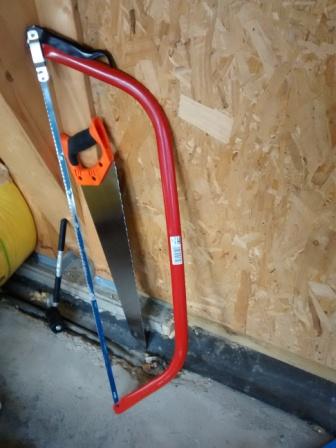
  • The standard wood saw
  • Insulation Saw (creates a very clean cut with minimum fibers in the air but it has difficulty cutting through the plastic cover of the insulation)-
    Insulation Saw
    Manual Insulation Saw


  • Electric Insulation saw (I did not buy one but this is what one looks like.)  –
Insulation
Dewalt Electric Insulation Saw DWE 397


  • Hand knives such as Stanley knives.

I could not find any tool that I could hire to cut the insulation in order to improve the accuracy of the cut nor speed up and simplify the installation. I tried a few ideas myself from a mechanical saw with senior hacksaw blades to an automatic tool I put together. I will return and develop a tool from what I have learned.

  • Home made tool-my preference was to use this tool I put together which was made up of 3 hacksaw blades. It allows one to roll the insulation on the floor and cut it as it is rolled.

    Insulation saw
    Home made saw with  hacksaw blades.

 Protective Equipment

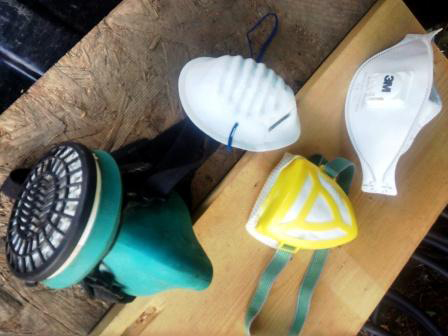
I tried numerous dust masks and the one I settled for was the 3M 9322+

3M 9322+
Masks Tested-Prefered the 3M 9322+ Mask

The other ones got too warm, did not keep out the insulation or caused the goggles to fog up.

When working on the ceiling a full visor mask worked out the best.

Wiring System (Lighting)

Lighting Control System

For the electrical wiring I plan to use a central control system called KNX for the lighting  ( I will build in the flexibility to control power outlets from the switch positions in the future) . What this means is that the power for the lights will come from a central fuse/distribution board and the switches for the lighting will be independently controlled by an extra low voltage.

The reasons for selecting this KNX control system are:

  • to reduce the impact of interfering with the airtight envelope (as the cable is similar to alarm cable thus less wiring will need to be installed and more room functions can be carried out with one cable).
  • Extra capacity can easily be included in each switch position in order to allow for wiring changes in the future. (If a new light needs to be controlled from an existing switch no modification of the wiring, internal wall/ceiling structure or room re-decoration needs to take place).
  • Because the voltage is very low and DC (Direct Current) it will reduce electrical and magnetic fields and minimize the use of 230 volts AC (Alternating Current) from a health perspective.
  • Possible to use extra functionality already available in KNX such as timers/power down control (did you ever have an ESB power failure and one had to leave the house before power was restored only to find when you came back that items were left on such as lights or hairdryers etc.-with the KNX system one can configure the system to return everything to the off position when power is restored.)
  • When leaving the house one switch can be configured to turn off all the lights or turn on essential lights.

I became a KNX partner in order to purchase the software to design and develop a prototype before the build. There are other building control systems and smart systems but the KNX system is a world standard and an open standard for commercial and domestic building control. Most of the large electrical companies manufacture  KNX products.

While the KNX system can manage the most complex building and smart home systems I will be using the most basic functions of the KNX system in order to keep costs under control and make use of the benefits as outlined above.

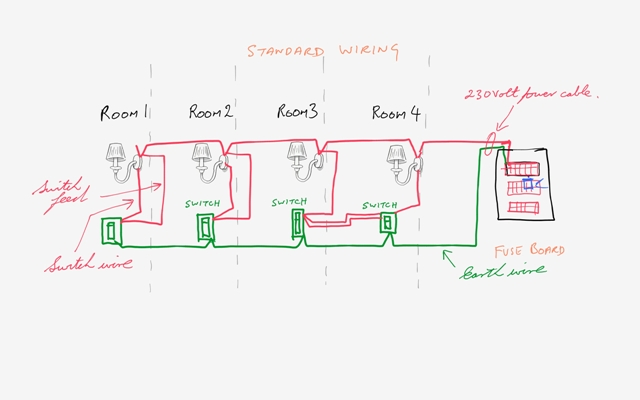
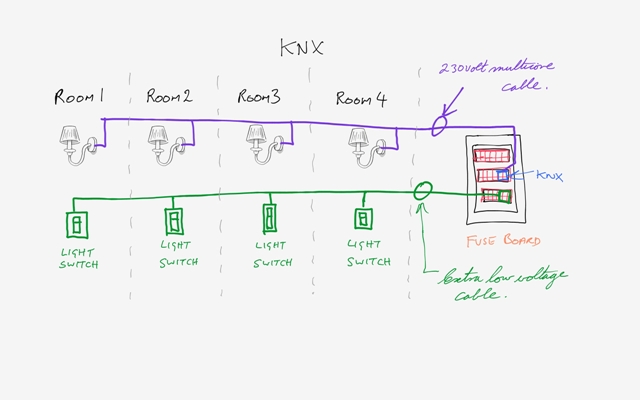
The sketch shown below might help to explain the difference between a standard wiring system and a KNX system.

Standard Wiring
Standard Wiring-230 Volts power cable at all light switches
KNX
KNX System-No direct connection from the switch to the light


Wooden Glulam (Week 3-5)

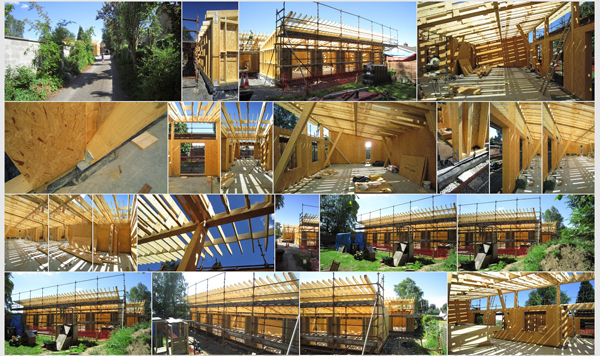
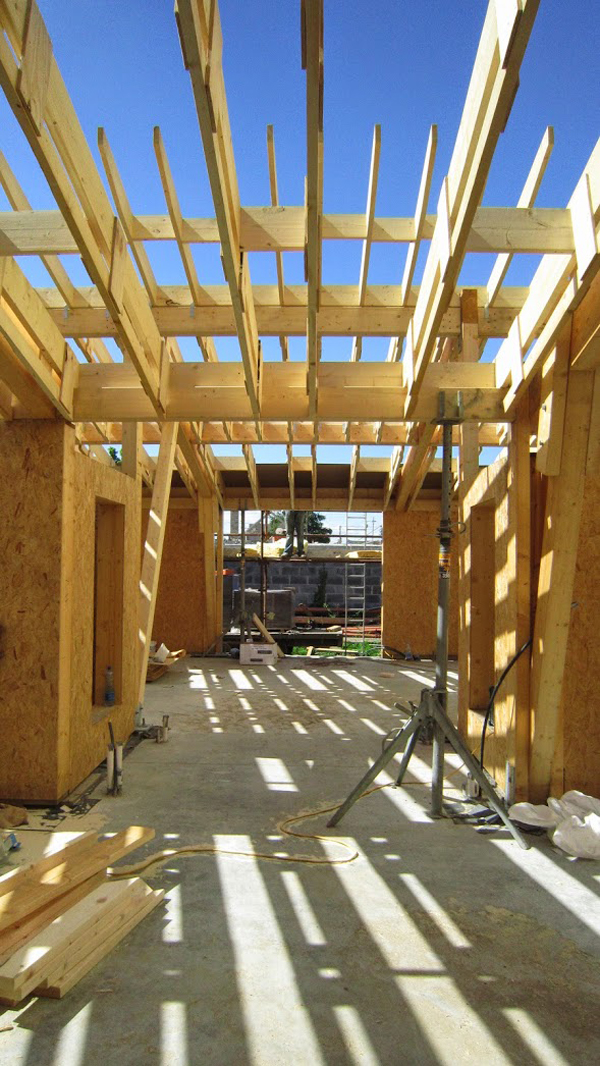
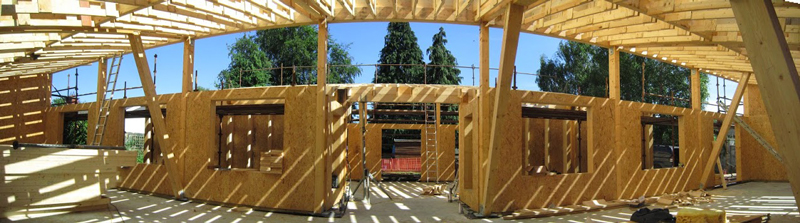
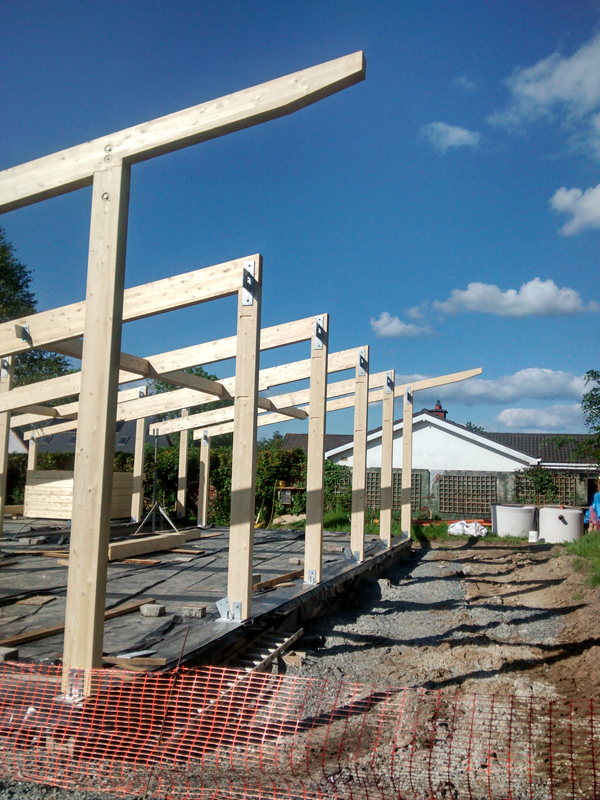
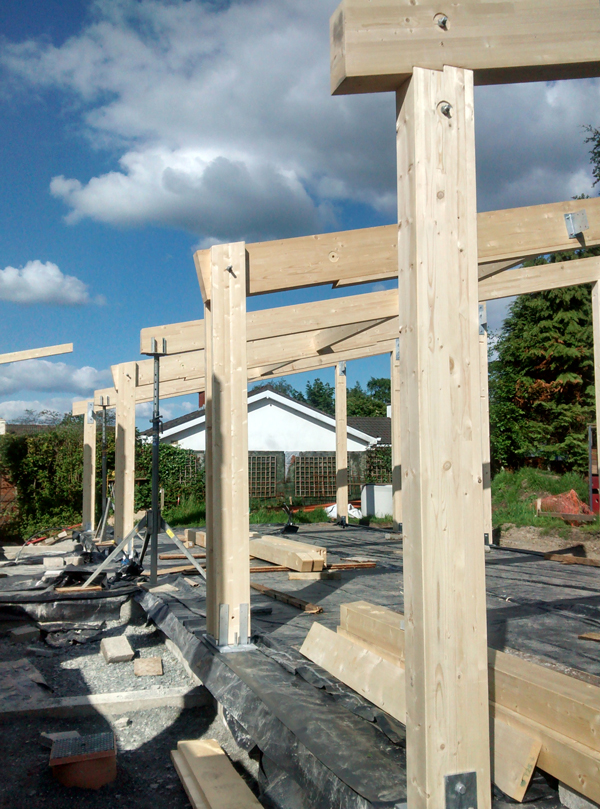
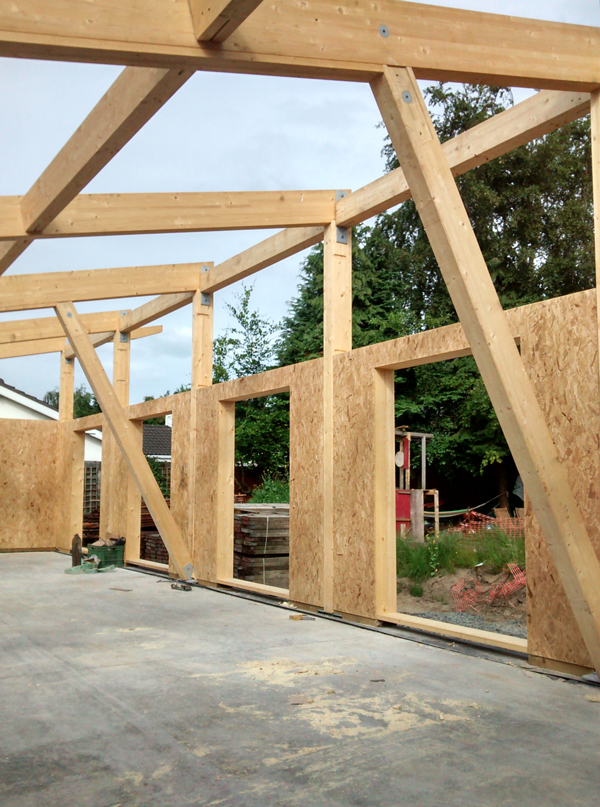
Work progresses on the wooden frame. As other self builders attest at certain times in a self build project the build moves quickly. This is one of those times.Self Build

Overview of Self Build

Entrance-View

Internal-View-of-Structure

Elevation-View End View

 Side View Above

Driveway

Living Area
Living Area
Roof Overhang
Steel Fixings to ring beam

Side View

Panorama-3

Panorama perspective curved view

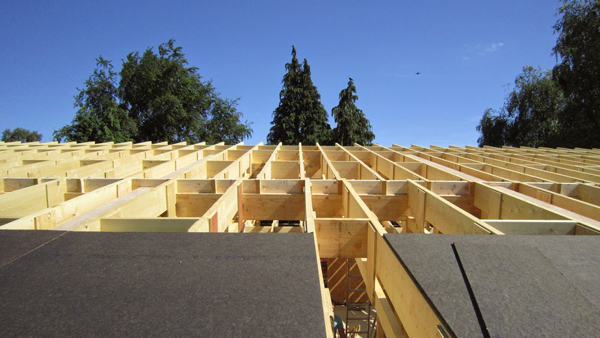
Roof-Detail

Roof detail with wood fibre board layer

Inside View Living Area

Images courtesy of David Hughes


Wooden Glulam (Week1-Week 2).

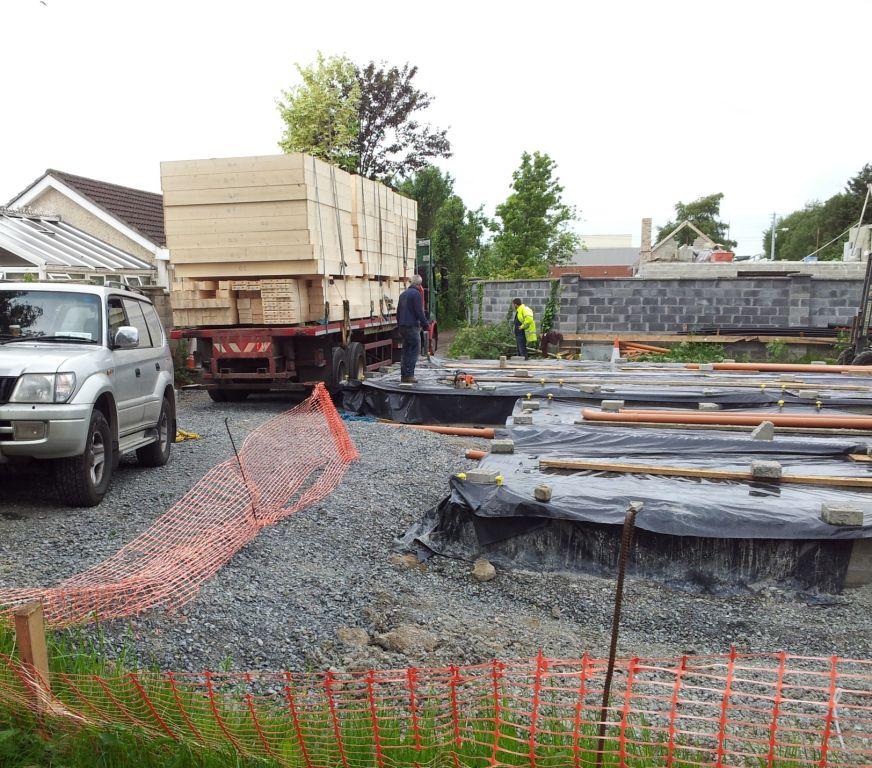
The arrival of the house frame is always a defining moment as it means that stage one of the concrete foundation is ready as per specification.

Self Build Passive House

As previously mentioned a few of the reasons for selecting a glulam beam system was that it allows for a flexible open plan design in the future where internal walls can be moved. It should also simplify the air-tightness strategy and the running of services.

Frame Arrival

The first few days were spent installing the posts and brackets.

Gluelam
Glue-lam posts Self Build
Gluelam
Glu-lam wall section Passive House Self Build


Brackets on ring beam


Glelam Passive House Self Build
Internal View of structure of Passive House


Foundation (Services)

Plumbing Services

A few notes that may be helpful to the self builder when planning the services such as sink waste, cold/hot water feeds, toilet services. The layout of the foundation services necessitates the early planning of bathroom layouts and even the choice of toilets and shower outlets before the floor slab is poured.

Foundation
Foundation Services-White pipes are electrical services.

We visited a local bathroom showroom and we were informed that there are a few different types of toilet systems and they require a different pipe outlet location in the floor to ensure that they will fit. One has also to be sure that the layout of the bathrooms and toilets are what you want before the slab is poured.

For the shower outlets one has to decide between the use of trays or a walk in that is tiled flush with the floor or other finish. This will necessitate different floor slab preparations.

Another factor to keep in mind is that showers or sinks that are lightly used may dry out in the pipe trap resulting in unwelcome smells. I am trying to locate a unit with a larger water trap.

For sink outlets waste pipes it is beneficial to have these mounted in the walls so that different arrangements can be facilitated later on. This necessitates the slab pipework being brought up in the centre of the partition or in the service cavity. I have tried to keep all these inside the airtight membrane.

Kitchen Services

These need a special mention as one has to consider a duct for power cables if a kitchen island is used, water drain outlets for dishwasher etc and a cold water feed for a sink. It is practical to have the water main feed coming into the kitchen first before branching to other locations around the house. (This is more than likely the place one expects to switch the supply on/off) . Consider the grease trap outlet location also as they are substantial in size.

Electrical Services

In relation to electrical cables entering and leaving the house one needs to plan for cable ducts to garden lighting, main electrical supply (using special red ducting), rainwater harvesting cables, power for central vacuum unit if mounted outside the house, telephone line, broadband cables, power for outside shed if applicable, control wiring for services in plant room if situated outside, CCTV/alarm cables if applicable or a plan for these. I feel it is better to put the ducts in now as any unplanned cable changes in the future will affect the fabric of the building. My preference was to use a single 40mm duct for each cable with large sweeping bends for the electrical services. I feel it will be easier to ensure an airtight/rodent/insect seal with heat-shrink tubing on each duct.

Foundation
Foundation Services Layout


Ducts

Separate 40mm ducts for each electrical service.

HRV Drip

The HRV unit may also need a water condensation drip outlet. For this I plan to use a half inch heavy duty pipe that will go outside rather than plumbing it into the sewerage outlet.

Garden Water Supply

Because we plan to use a gravity based system the garden taps will be fed from inside the house using a 1/2 inch or 1/4 inch pipe installed in the foundation. One will feed either side of the garden.

Central Vacuum System

If this is being installed a special flexible PVC duct is required if the unit is situated outside the house.

Vcuum
Vacuum duct if placing a central vacuum outside