Category Archives: Electrics

Wiring System (Lighting)

Lighting Control System

For the electrical wiring I plan to use a central control system called KNX for the lighting  ( I will build in the flexibility to control power outlets from the switch positions in the future) . What this means is that the power for the lights will come from a central fuse/distribution board and the switches for the lighting will be independently controlled by an extra low voltage.

The reasons for selecting this KNX control system are:

  • to reduce the impact of interfering with the airtight envelope (as the cable is similar to alarm cable thus less wiring will need to be installed and more room functions can be carried out with one cable).
  • Extra capacity can easily be included in each switch position in order to allow for wiring changes in the future. (If a new light needs to be controlled from an existing switch no modification of the wiring, internal wall/ceiling structure or room re-decoration needs to take place).
  • Because the voltage is very low and DC (Direct Current) it will reduce electrical and magnetic fields and minimize the use of 230 volts AC (Alternating Current) from a health perspective.
  • Possible to use extra functionality already available in KNX such as timers/power down control (did you ever have an ESB power failure and one had to leave the house before power was restored only to find when you came back that items were left on such as lights or hairdryers etc.-with the KNX system one can configure the system to return everything to the off position when power is restored.)
  • When leaving the house one switch can be configured to turn off all the lights or turn on essential lights.

I became a KNX partner in order to purchase the software to design and develop a prototype before the build. There are other building control systems and smart systems but the KNX system is a world standard and an open standard for commercial and domestic building control. Most of the large electrical companies manufacture  KNX products.

While the KNX system can manage the most complex building and smart home systems I will be using the most basic functions of the KNX system in order to keep costs under control and make use of the benefits as outlined above.

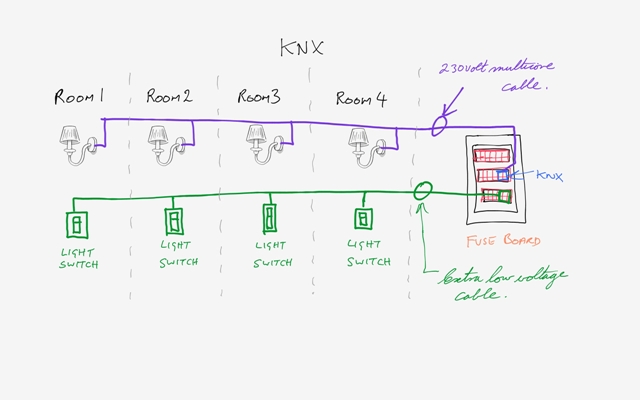
The sketch shown below might help to explain the difference between a standard wiring system and a KNX system.
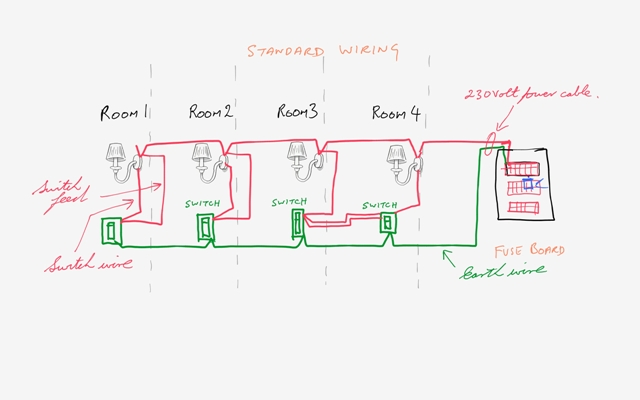
Standard Wiring
Standard Wiring-230 Volts power cable at all light switches
KNX
KNX System-No direct connection from the switch to the light


Foundation (Services)

Plumbing Services

A few notes that may be helpful to the self builder when planning the services such as sink waste, cold/hot water feeds, toilet services. The layout of the foundation services necessitates the early planning of bathroom layouts and even the choice of toilets and shower outlets before the floor slab is poured.

Foundation
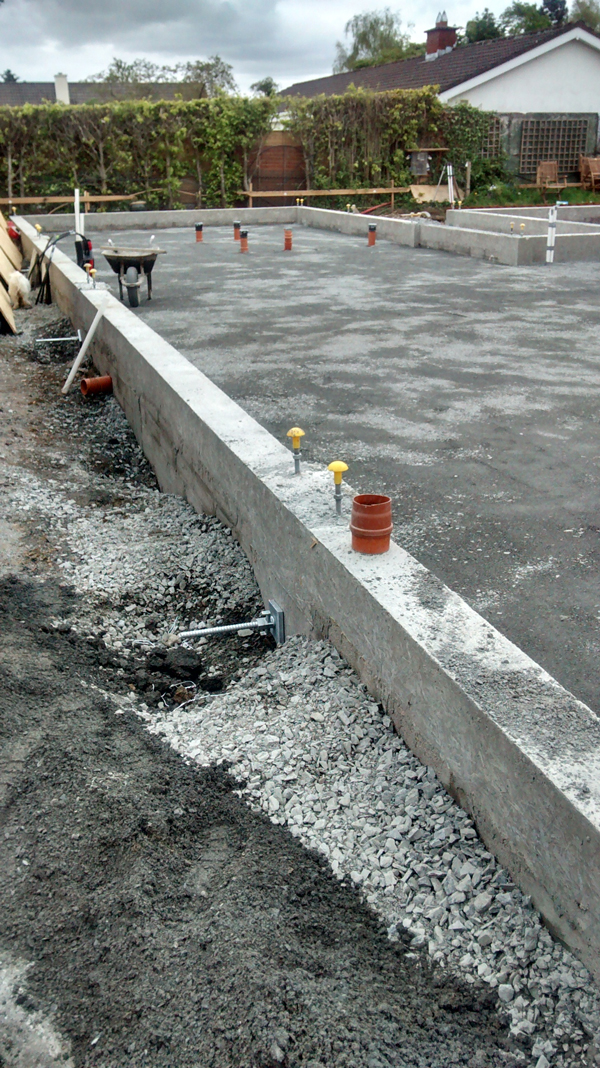
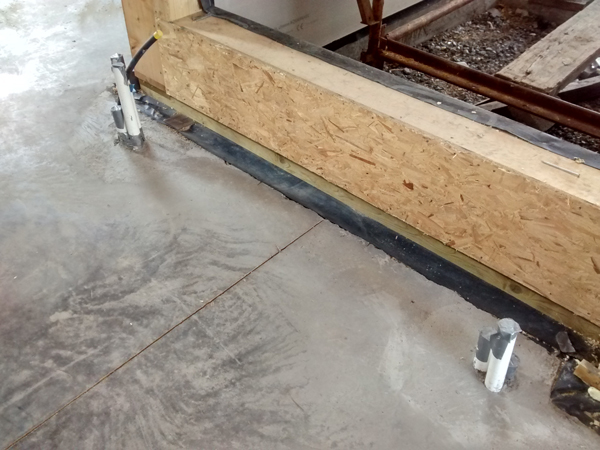
Foundation Services-White pipes are electrical services.

We visited a local bathroom showroom and we were informed that there are a few different types of toilet systems and they require a different pipe outlet location in the floor to ensure that they will fit. One has also to be sure that the layout of the bathrooms and toilets are what you want before the slab is poured.

For the shower outlets one has to decide between the use of trays or a walk in that is tiled flush with the floor or other finish. This will necessitate different floor slab preparations.

Another factor to keep in mind is that showers or sinks that are lightly used may dry out in the pipe trap resulting in unwelcome smells. I am trying to locate a unit with a larger water trap.

For sink outlets waste pipes it is beneficial to have these mounted in the walls so that different arrangements can be facilitated later on. This necessitates the slab pipework being brought up in the centre of the partition or in the service cavity. I have tried to keep all these inside the airtight membrane.

Kitchen Services

These need a special mention as one has to consider a duct for power cables if a kitchen island is used, water drain outlets for dishwasher etc and a cold water feed for a sink. It is practical to have the water main feed coming into the kitchen first before branching to other locations around the house. (This is more than likely the place one expects to switch the supply on/off) . Consider the grease trap outlet location also as they are substantial in size.

Electrical Services

In relation to electrical cables entering and leaving the house one needs to plan for cable ducts to garden lighting, main electrical supply (using special red ducting), rainwater harvesting cables, power for central vacuum unit if mounted outside the house, telephone line, broadband cables, power for outside shed if applicable, control wiring for services in plant room if situated outside, CCTV/alarm cables if applicable or a plan for these. I feel it is better to put the ducts in now as any unplanned cable changes in the future will affect the fabric of the building. My preference was to use a single 40mm duct for each cable with large sweeping bends for the electrical services. I feel it will be easier to ensure an airtight/rodent/insect seal with heat-shrink tubing on each duct.

Foundation
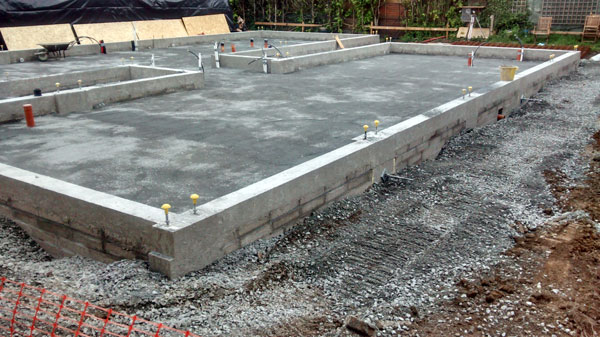
Foundation Services Layout


Ducts

Separate 40mm ducts for each electrical service.

HRV Drip

The HRV unit may also need a water condensation drip outlet. For this I plan to use a half inch heavy duty pipe that will go outside rather than plumbing it into the sewerage outlet.

Garden Water Supply

Because we plan to use a gravity based system the garden taps will be fed from inside the house using a 1/2 inch or 1/4 inch pipe installed in the foundation. One will feed either side of the garden.

Central Vacuum System

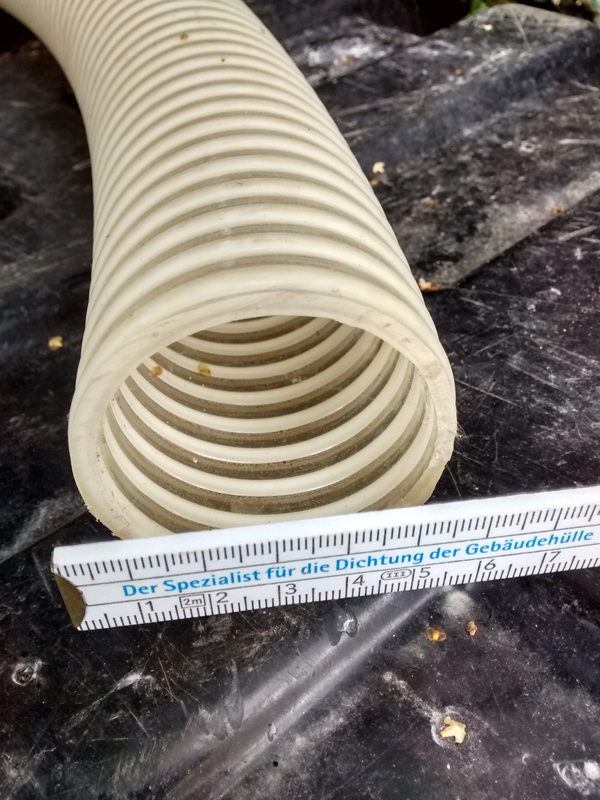
If this is being installed a special flexible PVC duct is required if the unit is situated outside the house.

Vcuum
Vacuum duct if placing a central vacuum outside